Longjuan Kong, Hui Li*. Substrate Induced Atomic and Electronic Structures of Borophene, Silicene, and Germanene[J]. Progress in Chemistry, 2017, 29(4): 337-347.
Contents
1 Introduction
2 The main physical properties of borophene on Ag(111)
2.1 The structure of borophene
2.2 The electronic properties of borophene
3 The main physical properties of silicene
3.1 The structure of monolayered silicene on Ag(111)
3.2 The atomic and electronic properties of multilayered silicene
3.3 The topological properties of reconstructed pure √3surface
3.4 The functionalized silicene
4 The main physical properties of germanene on Sb(111)
5 Conclusion
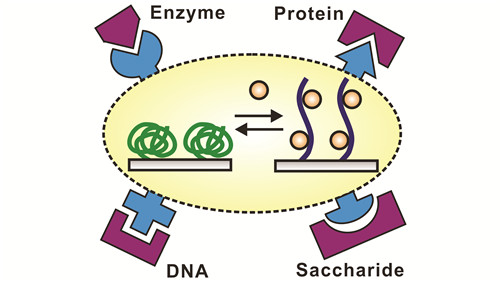
Hongxi Wang, Yuting Xiong, Guangyan Qing*, Taolei Sun*. Biomolecular Responsive Polymer Materials[J]. Progress in Chemistry, 2017, 29(4): 348-358.
Contents
1 Introduction
2 Saccharides-responsive
3 Protein-responsive
4 Enzyme-responsive
5 DNA-responsive
6 Conclusion
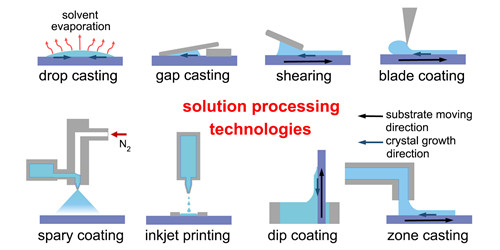
Yufu Chen, Xianggao Li, Yin Xiao, Shirong Wang. Solution Processed Large-Scale Small Molecular Organic Field-Effect Transistors[J]. Progress in Chemistry, 2017, 29(4): 359-372.
Contents
1 Introduction
2 Solution processable small molecular organic semiconductors
2.1 p-Type small molecular organic semiconductors
2.2 n-Type small molecular organic semiconductors
2.3 Ambipolar small molecular organic semiconductors
3 Solution processing technologies of large-scale small molecular OFETs
3.1 Drop casting
3.2 Meniscus guided coating
3.3 Printing
3.4 Thin-film post-processing technology
4 Conclusion and outlook
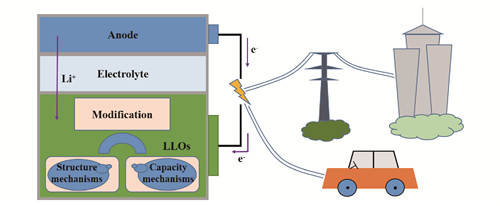
Ning Zhang, Ying Li. Lithium-Rich Layered Oxides as Cathode Materials: Structures, Capacity Origin Mechanisms and Modifications[J]. Progress in Chemistry, 2017, 29(4): 373-387.
Contents
1 Introduction
2 Structures
2.1 Solid solution structure
2.2 “Composite” structure
3 Origins of the 4.5 V plateau
3.1 “Oxygen loss” mechanism
3.2 “Reversible oxygen redox” mechanism
3.3 “Proton exchange” mechanism
3.4 Other mechanisms
4 Capacity loss mechanisms and modifications
4.1 Reasons and modifications of irreversible capacity loss during first cycle
4.2 Reasons and modifications of voltage decay upon cycles
4.3 Reasons and modifications of poor C-rate capability
5 Conclusion
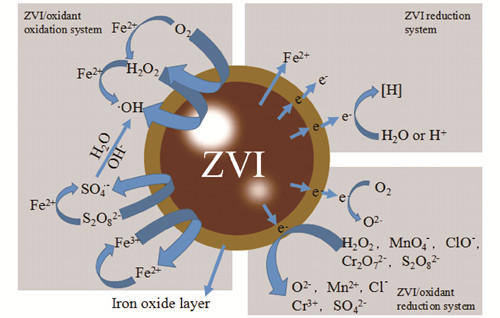
Shiying Yang, Tengfei Ren, Yixuan Zhang, Di Zheng, Jia Xin. ZVI/Oxidant Systems Applied in Water Environment and Their Electron Transfer Mechanisms[J]. Progress in Chemistry, 2017, 29(4): 388-399.
Contents
1 Introduction
2 Advanced oxidation processes
2.1 ZVI/oxidant advanced oxidation system
2.2 Physically enhanced ZVI/oxidant system
2.3 Chemically enhanced ZVI/oxidant system
3 Reduction processes
3.1 ZVI/O2 reduction system
3.2 ZVI/H2O2 reduction system
3.3 ZVI/PS reduction system
3.4 ZVI/other oxidants reduction system
4 Associative mechanisms of ZVI and oxidants
4.1 Simultaneous removal of combined pollutants
4.2 Removal of refractory pollutants
5 Conclusion
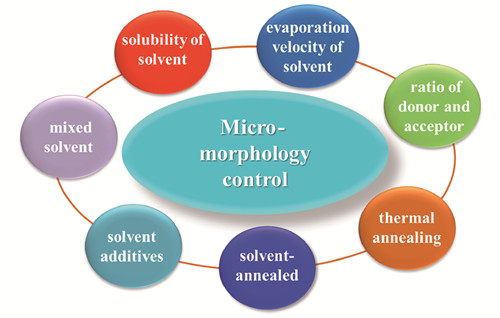
Jianxi Kang, Shirong Wang, Mengna Sun, Hongli Liu, Xianggao Li. Regulation Methods for Micro-Morphology of Bulk Heterojunction Polymer Solar Cells[J]. Progress in Chemistry, 2017, 29(4): 400-411.
Contents
1 Introduction
2 The formation process of organic bulk heterojunction
3 Regulation for micro-morphology of bulk heterojunction
3.1 Regulation for micro-morphology of bulk heterojunction by solvent-induced
3.2 Regulation for micro-morphology of bulk heterojunction by thermal annealing
3.3 Regulation for micro-morphology of bulk heterojunction by the ratio of donor and acceptor
4 Conclusion
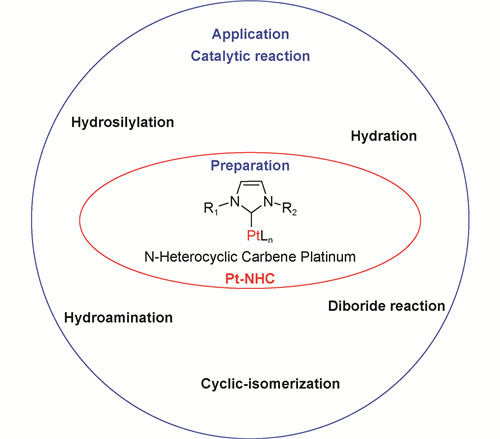
Fengxiang Zhang, Ying Bai*, Xiaoling Yang, Jiayun Li, Jiajian Peng*. Synthesis of N-Heterocyclic Carbene Platinum Complexes and Application in the Organic Reaction[J]. Progress in Chemistry, 2017, 29(4): 412-425.
Contents
1 Introduction
2 Application of Pt-NHC complexes for hydrosilylation
2.1 Preparation of Pt(0)-NHC complexes and catalysis hydrosilylation
2.2 Preparation of Pt(Ⅱ)-NHC complexes and catalysis hydrosilylation
3 Application of Pt(Ⅱ)-NHC complexes in the cyclic-isomerization
4 Application of Pt(Ⅱ)-NHC complexes in the hydroamination of unactivated alkenes
5 Application of Pt(Ⅱ)-NHC complexes in the hydration of alkynes
6 Application of Pt(Ⅱ)-NHC complexes in the boride reaction of cycloolefin
7 Conclusion
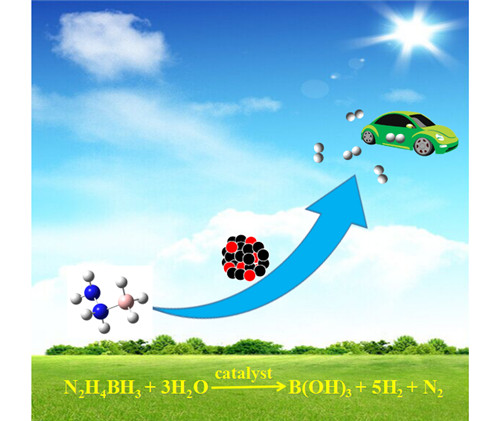
Shiliang Zhang, Qilu Yao, Zhanghui Lu*. Synthesis and Dehydrogenation of Hydrazine Borane[J]. Progress in Chemistry, 2017, 29(4): 426-434.
Contents
1 Introduction
2 Synthesis and characterization of hydrazine borane
2.1 Synthesis
2.2 Molecular and structural analyses
3 Dehydrogenation of hydrazine borane
3.1 Hydrolysis of the BH3 group of hydrazine borane
3.2 Hydrolysis of the BH3 group and dehydrogenation of the N2H4 moiety of hydrazine borane
3.3 Reaction mechanism of complete dehydrogenation of hydrazine borane
4 Conclusion
Qianqian Wang, Liping Wu, Jing Wang, Liyuan Wang*. Directed Self-Assembly of Block Copolymers[J]. Progress in Chemistry, 2017, 29(4): 435-442.
Contents
1 Introduction
2 Micro-phase separations of block copolymers (BCPs)
3 Directed self-assembly (DSA) of BCPs in thin films
3.1 Preparation of pre-templates
3.2 Control of template surface properties on self-assembly
3.3 DSA methods: grapho-epitaxy and chemcal-epitaxy
3.4 Other factors affecting the DSA morphology
3.5 Characterization and evaluation methods
4 Conclusion
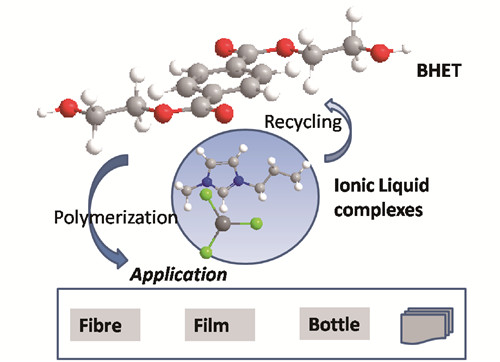
Haidong Cheng, Shuangjun Chen*. Degradation and Synthesis of Poly (Ethylene Terephthalate) by Functionalized Ionic Liquids[J]. Progress in Chemistry, 2017, 29(4): 443-449.
Contents
1 Introduction
2 Ionic liquid applied in the degradation of polyester
3 Ionic liquid applied in the synthesis of polyester
4 Conclusion
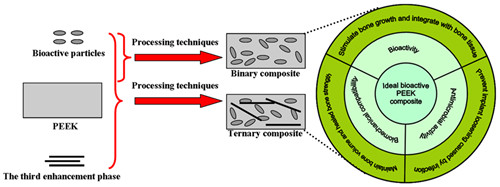
Lvhua Liu, Yanyan Zheng*, Lifang Zhang, Chengdong Xiong. Bioactive Polyetheretherketone Implant Composites for Hard Tissue[J]. Progress in Chemistry, 2017, 29(4): 450-458.
Contents
1 Introduction
2 PEEK/calcium phosphate composites
2.1 PEEK/hydroxyapatite composite
2.2 PEEK/β-tricalciumphosphate composite
3 Other PEEK composites
3.1 PEEK/carbon nanotubes/bioactive glass composite
3.2 PEEK/calcium silicate composite
3.3 PEEK/nano-titanium oxide composite
4 Conclusion