Zhang Wen-Bin, Wang Xiao-Man, Wang Xiao-Wei, Liu Dong, Han Shuai-Yuan, Cheng Stephen Z. D.. Giant Molecules Based on Nano-Atoms[J]. Progress in Chemistry, 2015, 27(10): 1333-1342.
Contents
1 Introduction
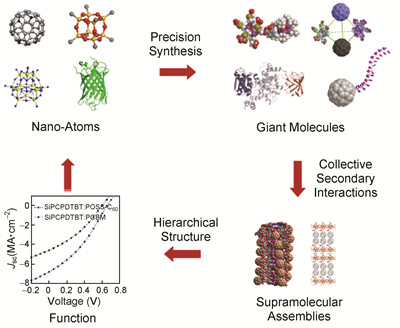
2 Giant molecules: the domain concept
3 Retro-functional analysis: structural synthon and functional synthon
4 Giant molecules: precision synthesis
4.1 Click chemistry
4.2 Molecular nanoparticles
4.3 Sequential click chemistry
5 Giant molecules: controlled assembly
6 Conclusion and outlook
Wang Gang, Chen Jinwei, Zhu Shifu, Zhang Jie, Liu Xiaojiang, Wang Ruilin. Activation of Carbon Electrodes for All-Vanadium Redox Flow Battery[J]. Progress in Chemistry, 2015, 27(10): 1343-1355.
Contents
1 Introduction
2 Carbon electrodes
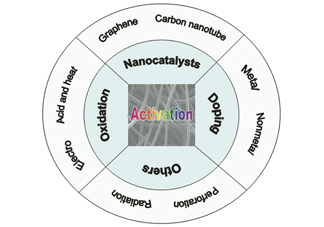
3 Active of carbon electrodes
3.1 Oxidation activation method
3.2 Doping activation method
3.3 Carbon nanocatalysts activation method
3.4 Other activation methods
4 Outlook
Zeng Feng, Pan Zhenzhen, Zhang Meng, Huang Yongzhuo, Cui Yanna, Xu Qin. Preparation and Application of Ordered Mesoporous Silica Nanoparticles in the Therapy and Diagnosis of Tumor[J]. Progress in Chemistry, 2015, 27(10): 1356-1373.
Contents
1 Introduction
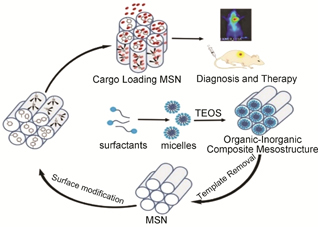
2 Preparation of MSNs
2.1 Methods of preparation in alkaline medium
2.2 Methods of preparation in acid medium
2.3 Methods of preparation in neutral medium
2.4 Methods of preparation in acid-base medium
3 Methods of removing templates
3.1 High-temperature calcination
3.2 Extraction method
3.3 Microwave digestion method
3.4 Oxidation method
3.5 Other methods
4 Surface modification and functionalization
4.1 Surface modification for stabilization
4.2 Surface modification for specific targeting
5 Application in the tumor diagnosis and therapy
5.1 Tumor diagnosis
5.2 Tumor therapy
5.3 Tumor theranostics
6 Conclusion and Outlook
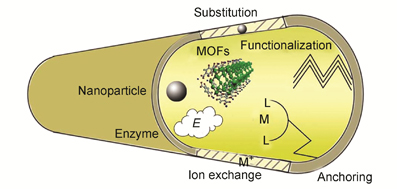
Zhang Xiaodong, Dong Han, Wang Yin, Cui Lifeng. Host-Guest Assembly and Application of Ordered Mesoporous Silica Materials[J]. Progress in Chemistry, 2015, 27(10): 1374-1383.
Contents
1 Introduction
2 The assembly of ordered mesoporous silica materials
2.1 Classification and characteristics of ordered mesoporous silica materials
2.2 Host- the assembly of metal ions
2.3 Guest-the assembly of metal particles
2.4 Guest-the assembly of MOFs
2.5 Guest-the assembly of enzymes and drug molecules
3 Applications
3.1 Environmental purification
3.2 Biology field
4 Conclusion and outlook
Su Yumiao, Lin Haijuan, Li Wenmu. The Applications of Carbazole and Carbazole-Related Compounds in Blue Emitting Organic Light-Emitting Diodes[J]. Progress in Chemistry, 2015, 27(10): 1384-1399.
Contents
1 Introduction
2 Small organic molecular carbazole-based blue emitting materials
2.1 Carbazole-based fluorescence materials
2.2 Carbazole-based phosphorescence materials
3 Carbazole-based thermally activated delayed fluorescence materials
4 Carbazole-containing polymers blue emitting materials
4.1 Polymers with pendant carbazolyl moieties
4.2 Polymers containing carbazole moieties in the main chain
5 Conclusion and outlook

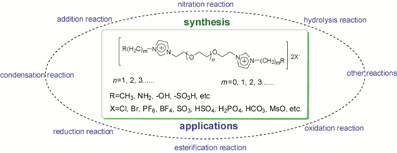
Xu Yisong, Zhang Fengxiang, Li Jiayun, Bai Ying, Xiao Wenjun, Peng Jiajian. Preparation and Applications in Organic Reactions of Polyethylene Glycol Functionalized Ionic Liquids[J]. Progress in Chemistry, 2015, 27(10): 1400-1412.
Contents
1 Introduction
2 Progress and preparation of polyethylene glycol functionalized ionic liquids
3 Application of polyethylene glycol functionalized ionic liquids in the addition reaction
3.1 Hydrosilylation
3.2 Cycloaddition of epoxy compounds with CO2
4 Application of polyethylene glycol functionalized ionic liquids in the condensation reaction
4.1 Application of polyethylene glycol functionalized ionic liquids/toluene in the acetal reaction
4.2 Condensation reaction of three components
4.3 Condensation reaction of four components
4.4 Knoevenagel condensation reaction
5 Application of polyethylene glycol functionalized ionic liquids in the reduction reaction
5.1 Application of PEG1000-DAIL/toluene in the reduction reaction of aromatic nitro compounds
5.2 Catalytic synthesis of 2-(amino benzene) six fluorine isopropyl alcohol
5.3 Catalytic hydrogenation
6 Application of polyethylene glycol functionalized ionic liquids in the esterification reaction
7 Application of polyethylene glycol functionalized ionic liquids in the nitration
8 Application of polyethylene glycol functionalized ionic liquids in the oxidation reaction
9 Application of polyethylene glycol functionalized ionic liquids in the hydrolysis reaction
10 Application of polyethylene glycol functionalized ionic liquids in the other reaction
11 Conclusion and perspective
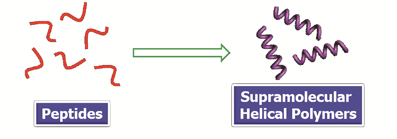
Wang Jun, Zhang Afang. Peptide-Mediated Supramolecular Helical Polymers[J]. Progress in Chemistry, 2015, 27(10): 1413-1424.
Contents
1 Introduction
2 Amphiphilic peptide-mediated supramolecular helical polymers
2.1 Pure peptides
2.2 Hydrophobic alkyl chain modified peptides
2.3 Aromatic short peptides
2.4 Bolaamphiphilic peptides
2.5 Peptides based on π-π interaction
2.6 Amyloid-like peptides
3 Topological peptide-mediated supramolecular helical polymers
3.1 Cyclopeptides
3.2 Dendritic peptides
3.3 C3 peptides
4 Peptide-based stimuli-responsive supramolecular helical polymers
4.1 Temperature
4.2 Light
4.3 pH
4.4 Metal ions
4.5 Enzyme
5 Conclusion
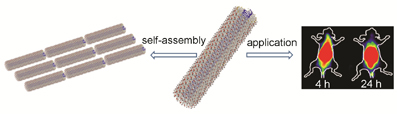
Liu Peng, Ning Yingnan, Zhou Quan, Mao Guoliang, Niu Zhongwei. One-Dimensional Rod-Like Tobacco Mosaic Virus: Self-Assembly and Applications[J]. Progress in Chemistry, 2015, 27(10): 1425-1434.
Contents
1 Introduction
2 Structural feature of TMV
3 Self-assembly
3.1 Self-assembly of TMV coat proteins
3.2 Self-assembly of TMV in solution and at interfaces
3.3 Self-assembly of TMV on substrates
4 Chemical and genetic modification
5 Applications
5.1 Surface coating
5.2 Patterning
5.3 Application in sensing
5.4 Application in the biomedical field
6 Conclusion and outlook
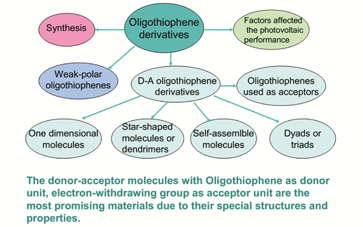
Guan Li, Zhang Xiaoyuan, Sun Fuqiang, Jiang Yue, Zhong Yiping, Liu Ping. Oligothiophene Derivatives in Organic Photovoltaic Devices[J]. Progress in Chemistry, 2015, 27(10): 1435-1447.
Contents
1 Introduction
2 Synthesis of oligothiophene derivatives
3 Applitation of oligothiophene derivatives on organic photovoltaic devices
3.1 Low-polar oligothiophenes
3.2 Donor-accepter oligothiophene derivatives
4 Conclusion and outlook
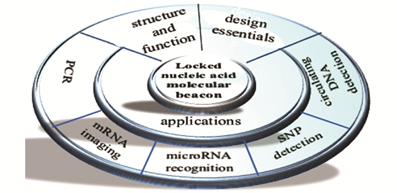
Gui Zhen, Yan Feng, Li Jinchang, Ge Mengyuan, Ju Huangxian. Applications of Locked Nucleic Acid Molecular Beacons in Molecular Recognition and Bioanalysis[J]. Progress in Chemistry, 2015, 27(10): 1448-1458.
Contents
1 Introduction
2 Structure and function of molecular beacons
3 Structure and properties of locked nucleic acid
4 Application of LNA in molecular recognition and biomedicine
4.1 LNA antisense
4.2 LNA-modified siRNA (siLNA)
4.3 LNA-modified DNAzyme (LNAzymes)
5 LNA in biotechnology
5.1 LNA primers and PCR
5.2 LNA probes and hybridization
5.3 LNA modification in aptamers
5.4 LNA molecular beacons
6 Design of locked nucleic acid molecular beacons
6.1 Selection of the reporter and quencher
6.2 Hermodynamic aspects
6.3 Balance between selectivity and hybridization rate
6.4 Modification of LNA
7 Applications of LNA-MB in molecular recognition and bioanalysis
7.1 Real time PCR
7.2 mRNA imaging in living cells
7.3 Targeted recognition of microRNA
7.4 Single nucleotide polymorphisms
7.5 Detection of circulating DNA using LNA-MB
8 Conclusion
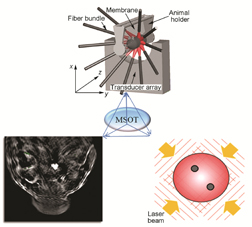
Liu Yingya, Fan Xiao, Li Yanyan, Qu Lulu, Qin Haiyue, Cao Yingnan, Li Haitao. Multispectral Photoacoustic Tomography and Its Development in Biomedical Application[J]. Progress in Chemistry, 2015, 27(10): 1459-1469.
Contents
1 Introduction
2 Photoacoustic imaging technology
2.1 Principle of operation
2.2 Classification of photoacoustic imaging
3 Multispectral photoacoustic tomography
3.1 MSOT experimental setup
3.2 Exogenous contrast agents
3.3 Performance characteristics
4 Advantages and challenges of MSOT
5 Applications of MSOT in biomedicine
5.1 Real-time monitoring of neovascularization
5.2 Early diagnosis of cancer
5.3 Targeting tumor imaging
6 Conclusion and outlook
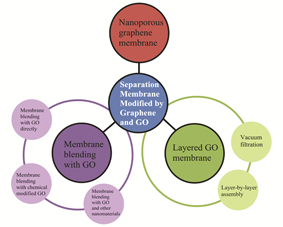
Wang Xi, Guo Xiaoyan, Shao Huaiqi, Zhou Qixing, Hu Wanli, Song Xiaojing. Methods, Performances and Mechanisms of Separation Membrane Modified by Graphene and Graphene Oxide[J]. Progress in Chemistry, 2015, 27(10): 1470-1480.
Contents
1 Introduction
2 Membrane blending with GO
2.1 Membrane blending with GO directly
2.2 Membrane blending with chemical modified GO
2.3 Membrane blending with GO and other nanomaterials
3 Nanoporous graphene membrane
4 Layered GO membrane
4.1 Fabrication methods of layered GO membrane
4.2 Mechanism of layered GO membrane
5 Conclusion and outlook
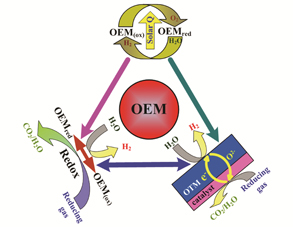
Zhai Kang, Li Kongzhai, Zhu Xing, Wei Yonggang. Oxygen Exchange Materials Used in Two-Steps Thermochemical Water Splitting for Hydrogen Production[J]. Progress in Chemistry, 2015, 27(10): 1481-1499.
Contents
1 Introduction
2 Redox oxygen exchange materials (Redox-OEM)
2.1 Thermochemical reduction system
2.2 CH4 reduction system
2.3 Syngas/CO reduction system
2.4 H2 reduction system
3 Oxygen Transport Membranes (OTM-OEM)
3.1 CO/H2 reduction system
3.2 CH4 reduction system
3.3 Other systems
4 Conclusion and outlook
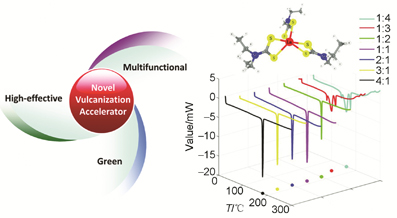
Li Longfei, Bai Yinna, Lei Ming, Liu Li. Progress in Rubber Vulcanization Accelerator[J]. Progress in Chemistry, 2015, 27(10): 1500-1508.
Contents
1 Introduction
2 Ionic liquids vulcanization accelerators
3 Novel dithiocarbamate accelerators
4 Rare earth accelerators
4.1 Traditional rare earth accelerators
4.2 Novel zinc-free rare earth accelerators
4.3 Rare earth-transition metal multinuclear accelerators
5 New secondary accelerators
6 Conclusion and outlook
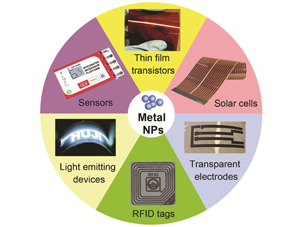
Cui Shuyuan, Liu Jun, Wu Wei. Preparation of Metal Nanoparticles-Based Conductive Inks and Their Applications in Printed Electronics[J]. Progress in Chemistry, 2015, 27(10): 1509-1522.
Contents
1 Introduction
2 Preparation of printable metal nanoparticles
2.1 Classification of metal nanoparticles
2.2 Synthesis of metal nanoparticles
2.3 Stabilization of metal nanoparticles
3 Preparation of metal nanoparticles-based conductive inks
4 Post-printing treatment and resistivity
4.1 Electrical resistivity
4.2 Sintering of printed conductive patterns
5 Applications
5.1 Transparent electrodes
5.2 Light emitting devices
5.3 Thin film transistors
5.4 Solar cells
5.5 Sensors
5.6 RFID tags
6 Conclusions