文章编号: 20190504
文献标识码: A
含胍基抗菌聚合物的合成及应用
收稿日期:2018-09-28
要求修回日期:2018-11-22
网络出版日期:2019-03-21
基金资助
国家自然科学基金项目(21374130)
国家自然科学基金项目(21074146)
中国科学院有机功能分子合成与组装化学重点实验室开放课题项目(K2018-5)
版权
Synthesis and Application of Guanidine-Based Antibacterial Polymers
Received:28 Sept. 2018
rev-requestrev-request:22 Nov. 2018
Online:21 Mar. 2019
Fund
National Natural Science Foundation of China(21374130)
National Natural Science Foundation of China(21074146)
Opening Project of Key Laboratory of Synthetic and Self-Assembly Chemistry for Organic Functional Molecules, Chinese Academy of Sciences(K2018-5)
Copyright
张浩 , 刘静 , 崔崑 , 姜涛 , 马志 . 含胍基抗菌聚合物的合成及应用[J]. 化学进展, 2019 , 31(5) : 681 -689 . DOI: 10.7536/PC180930
Hao Zhang , Jing Liu , Kun Cui , Tao Jiang , Zhi Ma . Synthesis and Application of Guanidine-Based Antibacterial Polymers[J]. Progress in Chemistry, 2019 , 31(5) : 681 -689 . DOI: 10.7536/PC180930
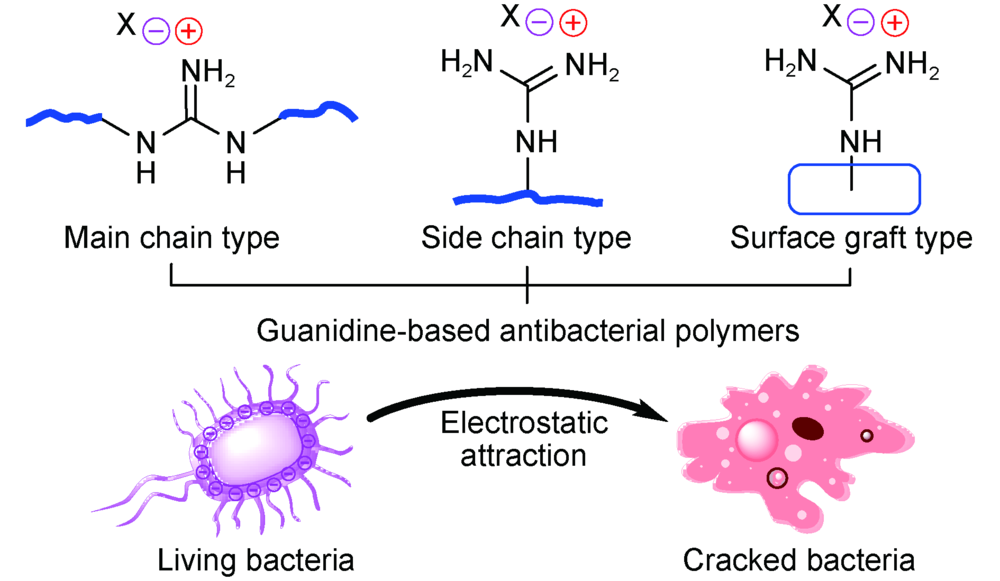
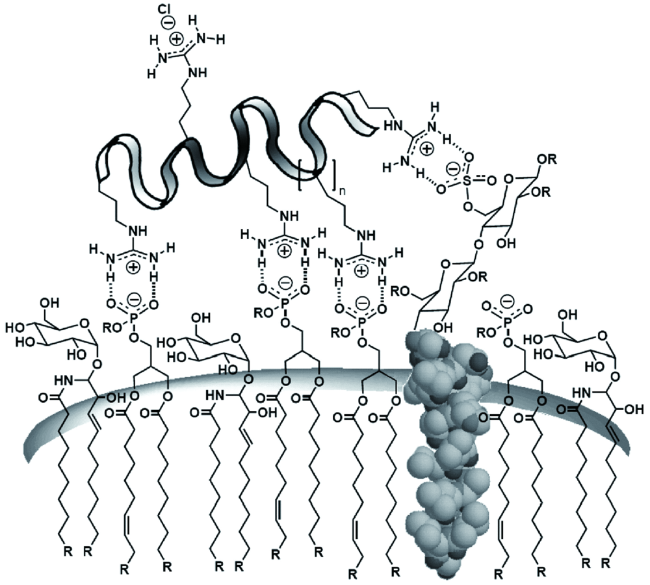
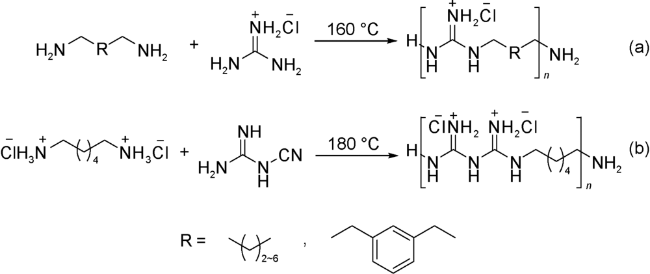
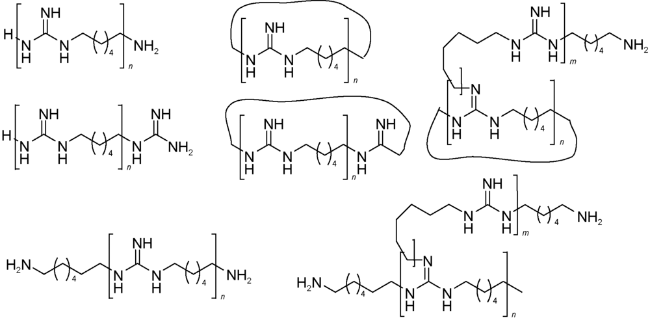
Exploition of novel antibacterial agents that contact non-specifically with bacteria is one of the solutions to the problem of bacterial infection. Firstly, guanidine-based antibacterial polymers having prolonged, broad-spectrum, high-efficiency antibacterial properties, without eukaryotic cytotoxicity, and making it difficult for bacteria to develop resistance are introduced briefly. Then, the antibacterial mechanism of non-specific electrostatic attraction with bacteria is reviewed. In addition, the design, synthesis, and antimicrobial property of the main-chained guanidine-based antibacterial polymers, side-chained guanidine-based antibacterial polymers, and surface-grafted guanidine-based antibacterial polymers are described in detail. Finally, the future development of controllable synthetic strategy and practical application of the novel guanidine-based antibacterial polymers are prospected.
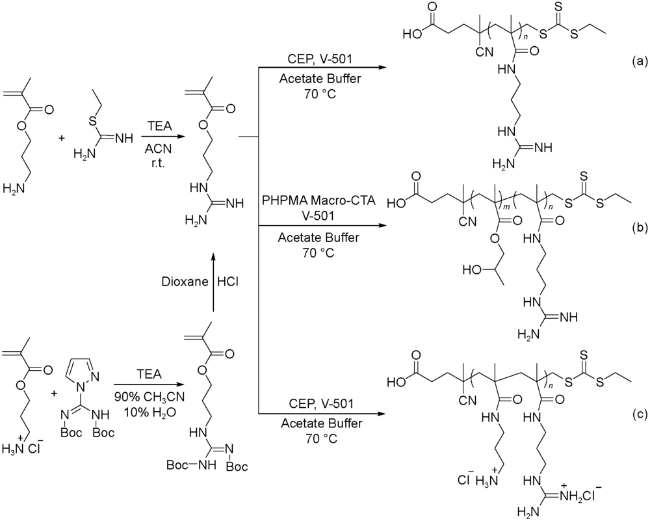
图10 3-胍基丙基甲基丙烯酰胺(GPMA)的合成及其水相RAFT聚合制备均聚物PGPMA(a)、嵌段共聚物PGPMA-b-PHPMA(b)和无规共聚物P(GPMA-co-APMA)(c)[24, 51]Fig. 10 Synthesis of 3-guanidinopropyl methacrylamide(GPMA) and subsequent RAFT polymerization in water to prepare PGPMA homopolymers(a) and PGPMA-b-PHPMA block copolymers(b) and P(GPMA-co-APMA) copolymers(c)[24, 51] |
| [1] |
Fernandes P . Nat. Biotechnol., 2006,24:1497. https://www.ncbi.nlm.nih.gov/pubmed/17160049
DOI: 10.1038/nbt1206-1497 PMID: 17160049 A combination of approaches and compounds-many of which failed to yield immediate results in the past-will ultimately prove invaluable to the drug industry in the ongoing battle against infectious disease. |
| [2] |
Fischbach M A, Walsh C T . Science, 2009,325:1089. https://www.ncbi.nlm.nih.gov/pubmed/19713519
DOI: 10.1126/science.1176667 PMID: 19713519 Antibiotic-resistant strains of pathogenic bacteria are increasingly prevalent in hospitals and the community. New antibiotics are needed to combat these bacterial pathogens, but progress in developing them has been slow. Historically, most antibiotics have come from a small set of molecular scaffolds whose functional lifetimes have been extended by generations of synthetic tailoring. The emergence of multidrug resistance among the latest generation of pathogens suggests that the discovery of new scaffolds should be a priority. Promising approaches to scaffold discovery are emerging; they include mining underexplored microbial niches for natural products, designing screens that avoid rediscovering old scaffolds, and repurposing libraries of synthetic molecules for use as antibiotics. |
| [3] |
McDonnell G, Russell A D . Clin. Microbiol. Rev., 2001,14:227.
|
| [4] |
Levy S B, Marshall B . Nat. Med., 2004,10:S122. https://www.ncbi.nlm.nih.gov/pubmed/15577930
DOI: 10.1038/nm1145 PMID: 15577930 The optimism of the early period of antimicrobial discovery has been tempered by the emergence of bacterial strains with resistance to these therapeutics. Today, clinically important bacteria are characterized not only by single drug resistance but also by multiple antibiotic resistance--the legacy of past decades of antimicrobial use and misuse. Drug resistance presents an ever-increasing global public health threat that involves all major microbial pathogens and antimicrobial drugs. |
| [5] |
Nathan C . Nature, 2004,431:899. https://www.ncbi.nlm.nih.gov/pubmed/15496893
DOI: 10.1038/431899a PMID: 15496893 |
| [6] |
Denyer S P, Stewart G S A B . Int. Biodeterior. Biodegrad., 1998,41:261.
|
| [7] |
Kenawy E, Worley S D, Broughton R . Biomacromolecules, 2007,8:1359. https://www.ncbi.nlm.nih.gov/pubmed/17425365
DOI: 10.1021/bm061150q PMID: 17425365 Microbial infection remains one of the most serious complications in several areas, particularly in medical devices, drugs, health care and hygienic applications, water purification systems, hospital and dental surgery equipment, textiles, food packaging, and food storage. Antimicrobials gain interest from both academic research and industry due to their potential to provide quality and safety benefits to many materials. However, low molecular weight antimicrobial agents suffer from many disadvantages, such as toxicity to the environment and short-term antimicrobial ability. To overcome problems associated with the low molecular weight antimicrobial agents, antimicrobial functional groups can be introduced into polymer molecules. The use of antimicrobial polymers offers promise for enhancing the efficacy of some existing antimicrobial agents and minimizing the environmental problems accompanying conventional antimicrobial agents by reducing the residual toxicity of the agents, increasing their efficiency and selectivity, and prolonging the lifetime of the antimicrobial agents. Research concerning the development of antimicrobial polymers represents a great a challenge for both the academic world and industry. This article reviews the state of the art of antimicrobial polymers primarily since the last comprehensive review by one of the authors in 1996. In particular, it discusses the requirements of antimicrobial polymers, factors affecting the antimicrobial activities, methods of synthesizing antimicrobial polymers, major fields of applications, and future and perspectives in the field of antimicrobial polymers. |
| [8] |
Ding W, Peng K M, Zou T, Wang R N, Guo J S, Tu W P, Liu C, Hu J Q . Pigm. Resin Technol., 2017,46:458.
|
| [9] |
Siedenbiedel F, Tiller J C . Polymers, 2012,4:46.
|
| [10] |
彭开美(Peng K M), 丁伟(Ding W), 涂伟萍(Tu W P), 胡剑青(Hu J Q), Liu Chao(Liu C), Yang Jian(Yang J) . 化学学报 (Acta Chimica Sinica), 2016,74(9):713.
|
| [11] |
Hui F, Debiemme-Chouvy C . Biomacromolecules, 2013,14:585. https://www.ncbi.nlm.nih.gov/pubmed/23391154
DOI: 10.1021/bm301980q PMID: 23391154 Antimicrobial N-halamine polymers and coatings have been studied extensively over the past decade thanks to their numerous qualities such as effectiveness toward a broad spectrum of microorganisms, long-term stability, regenerability, safety to humans and environment and low cost. In this review, recent developments are described by emphasizing the synthesis of polymers and/or coatings having N-halamine moieties. Actually, three main approaches of preparation are given in detail: polymerization, generation by electrochemical route with proteins as monomers and grafting with precursor monomers. Identification and characterization of the formation of the N-halamine bonds (>N-X with X = Cl or Br or I) by physical techniques such as Fourier transform infrared spectroscopy (FTIR), nuclear magnetic resonance spectroscopy (NMR), energy-dispersive X-ray spectroscopy (EDX), X-ray photoelectron spectroscopy (XPS), and by chemical reactions are described. In order to check the antimicrobial activity of the N-halamine compounds, bacterial tests are also described. Finally, some examples of application of these N-halamines in the water treatment, paints, healthcare equipment, and textile industries are presented and discussed. |
| [12] |
Palermo E F, Kuroda K . Appl. Microbiol. Biotechnol., 2010,87:1605. https://www.ncbi.nlm.nih.gov/pubmed/20563718
DOI: 10.1007/s00253-010-2687-z PMID: 20563718 Antimicrobial polymers, designed to mimic the salient structural features of host defense peptides, are an emerging class of materials with potential for applications to combat infectious disease. Because the putative mode of action relies on physiochemical parameters of peptides such as hydrophobicity and cationic charge, rather than specific receptor-mediated interactions, the activity of the polymers can be modulated by tuning key structural parameters. While a wide diversity of chemical structures have been reported as antimicrobial polymers, a precise understanding of the structural factors which control their activity is a subject of current investigations. In this mini-review, we will outline the design principles that have been developed so far to fine tune the activity of these antimicrobial agents. The roles played by specific structural features such as cationic charge, hydrophobicity, and molecular weight will be discussed. Future directions of the field and potential challenges will be proposed. |
| [13] |
Kuroda K, Caputo G A . Wiley Interdiscip. Rev.: Nanomed. Nanobiotechnol., 2013,5:49.
|
| [14] |
Xue Y, Xiao H N, Zhang Y . Int. J. Mol. Sci., 2015,16:3626. http://www.mdpi.com/1422-0067/16/2/3626
DOI: 10.3390/ijms16023626 PMID: 25667977 Polymeric materials containing quaternary ammonium and/or phosphonium salts have been extensively studied and applied to a variety of antimicrobial-relevant areas. With various architectures, polymeric quaternary ammonium/phosphonium salts were prepared using different approaches, exhibiting different antimicrobial activities and potential applications. This review focuses on the state of the art of antimicrobial polymers with quaternary ammonium/phosphonium salts. In particular, it discusses the structure and synthesis method, mechanisms of antimicrobial action, and the comparison of antimicrobial performance between these two kinds of polymers. |
| [15] |
Tashiro T . Macromol. Mater. Eng., 2001,286:63. http://doi.wiley.com/10.1002/%28ISSN%291439-2054
|
| [16] |
Timofeeva L, Kleshcheva N . Appl. Microbiol. Biotechnol., 2011,89:475. https://www.ncbi.nlm.nih.gov/pubmed/20953604
DOI: 10.1007/s00253-010-2920-9 PMID: 20953604 Complex epidemiological situation, nosocomial infections, microbial contamination, and infection risks in hospital and dental equipment have led to an ever-growing need for prevention of microbial infection in these various areas. Macromolecular systems, due to their properties, allow one to efficiently use them in various fields, including the creation of polymers with the antimicrobial activity. In the past decade, the intensive development of a large class of antimicrobial macromolecular systems, polymers, and copolymers, either quaternized or functionalized with bioactive groups, has been continued, and they have been successfully used as biocides. Various permanent microbicidal surfaces with non-leaching polymer antimicrobial coatings have been designed. Along with these trends, new moderately hydrophobic polymer structures have been synthesized and studied, which contain protonated primary or secondary/tertiary amine groups that exhibited rather high antimicrobial activity, often unlike their quaternary analogues. This mini-review briefly highlights and summarizes the results of studies during the past decade and especially in recent years, which concern the mechanism of action of different antimicrobial polymers and non-leaching microbicidal surfaces, and factors influencing their activity and toxicity, as well as major applications of antimicrobial polymers. |
| [17] |
Mitchell D J, Kim D T, Steinman L, Fathman C G, Rothbard J B . J. Pept. Res., 2000,56:318. https://www.ncbi.nlm.nih.gov/pubmed/11095185
DOI: 10.1034/j.1399-3011.2000.00723.x PMID: 11095185 Homopolymers or peptides containing a high percentage of cationic amino acids have been shown to have a unique ability to cross the plasma membrane of cells, and consequently have been used to facilitate the uptake of a variety of biopolymers and small molecules. To investigate whether the polycationic character of these molecules, or some other structural feature, was the molecular basis for the effect, the ability of a variety of homopolymers to enter cells was assayed by confocal microscopy and flow cytometry. Polymers of L- or D-arginine containing six or more amino acids entered cells far more effectively than polymers of equal length composed of lysine, ornithine and histidine. Peptides of fewer than six amino acids were ineffective. The length of the arginine side-chain could be varied without significant loss of activity. These data combined with the inability of polymers of citrulline to enter cells demonstrated that the guanidine headgroup of arginine was the critical structural component responsible for the biological activity. Cellular uptake could be inhibited by preincubation of the cells with sodium azide, but not by low temperature (3 degrees C), indicating that the process was energy dependent, but did not involve endocytosis. |
| [18] |
Locock K E, Michl T D, Valentin J D, Vasilev K, Hayball J D, Qu Y, Traven A, Griesser H J, Meagher L, Haeussler M . Biomacromolecules, 2013,14:4021. https://www.ncbi.nlm.nih.gov/pubmed/24099527
DOI: 10.1021/bm401128r PMID: 24099527 We have synthesized a series of copolymers containing both positively charged (amine, guanidine) and hydrophobic side chains (amphiphilic antimicrobial peptide mimics). To investigate the structure-activity relationships of these polymers, low polydispersity polymethacrylates of varying but uniform molecular weight and composition were synthesized, using a reversible addition-fragmentation chain transfer (RAFT) approach. In a facile second reaction, pendant amine groups were converted to guanidines, allowing for direct comparison of cation structure on activity and toxicity. The guanidine copolymers were much more active against Staphylococcus epidermidis and Candida albicans compared to the amine analogues. Activity against Staphylococcus epidermidis in the presence of fetal bovine serum was only maintained for guanidine copolymers. Selectivity for bacterial over mammalian cells was assessed using hemolytic and hemagglutination toxicity assays. Guanidine copolymers of low to moderate molecular weight and hydrophobicity had high antimicrobial activity with low toxicity. Optimum properties appear to be a balance between charge density, hydrophobic character, and polymer chain length. In conclusion, a suite of guanidine copolymers has been identified that represent a new class of antimicrobial polymers with high potency and low toxicity. |
| [19] |
Mattheis C, Wang H, Meister C, Agarwal S . Macromol. Biosci., 2013,13:242. https://www.ncbi.nlm.nih.gov/pubmed/23255254
DOI: 10.1002/mabi.201200217 PMID: 23255254 The effect of converting ammonium into guanidine moieties, compared to other factors such as molecular weight or hydrophobicity, on the antibacterial activity is investigated for homo- and copolymers of 2-aminoethylmethacrylate in solution or coatings. Polymers are obtained by free radical polymerization, polymer-analogous guanidinylation is conducted with cyanamide; non-leaching immobilization is achieved by LBL assembly of homopolymers or crosslinking of functional sidegroups in copolymers. Antibacterial activity to Escherichia coli or Bacillus subtilis is determined by different standard methods. Guanidinylation improves antibacterial activity and speed as well as cytotoxicity of hydrophilic homo- and copolymers in solution or coatings. |
| [20] |
Motta G J, Milne C T, Corbett L Q . Ostomy Wound Manage., 2004,50:48.
|
| [21] |
Wu D Q, Zhu J, Han H, Zhang J Z, Wu F F, Qin X H, Yu J Y . Acta Biomater., 2018,65:305. https://www.ncbi.nlm.nih.gov/pubmed/28867649
DOI: 10.1016/j.actbio.2017.08.048 PMID: 28867649 13C NMR, 1H NMR and FTIR spectroscopy. The hydrogel morphology characterized by scanning electron microscopy confirmed that the homogeneous porous and interconnected structures of the hydrogels. The swelling, protein adsorption property, in vitro release of CHX, antimicrobial assessment, cell viability as well as in vivo wound healing in a mouse model were studied. The results showed the nontoxicity and antimicrobial P(M-Arg/NIPAAm) hydrogel accelerated the full-thickness wound healing process and had the potential application in wound dressing.]]> |
| [22] |
Kawabata A, Taylor J . Dyes Pigm., 2006,68:197.
|
| [23] |
Li Z L, Chen J, Cao W, Wei D, Zheng A N, Guan Y . Carbohydr. Polym., 2018,180:192. https://www.ncbi.nlm.nih.gov/pubmed/29103495
DOI: 10.1016/j.carbpol.2017.09.080 PMID: 29103495 Antimicrobial cotton fabrics received much attention for the demand of health and hygiene fields. In this work, an antimicrobial copolymer was prepared via a reaction between polyhexamethylene guanidine hydrochloride and polypropylene glycol diglycidyl ether. The copolymer has amphiphilic characteristic and excellent antimicrobial properties. When the copolymer was adhered onto cotton fabrics through physical adsorption and chemical bonding using dipping-drying method, the resultant cotton fabrics had excellent and durable antimicrobial properties. The antimicrobial rates against Escherichia coli and Staphylococcus aureus were higher than 99.99% when the adsorption amount of the copolymer was above 35.5mg/g. The antimicrobial cotton fabrics remained the excellent antimicrobial properties even after laundered with detergent solution. |
| [24] |
Treat N J, Smith D, Teng C, Flores J D, Abel B A, York A W, Huang F, McCormick C L . ACS Macro Lett., 2012,1:100. https://www.ncbi.nlm.nih.gov/pubmed/22639734
DOI: 10.1021/mz200012p PMID: 22639734 We report the synthesis and controlled radical homo- and block copolymerization of 3-guanidinopropyl methacrylamide (GPMA) utilizing aqueous reversible addition-fragmentation chain transfer (aRAFT) polymerization. The resulting homopolymer and block copolymer with N-(2-hydroxypropyl) methacrylamide (HPMA) were prepared to mimic the behavior of cell penetrating peptides (CPPs) and poly(arginine) (> 6 units) which have been shown to cross cell membranes. The homopolymerization mediated by 4-cyano-4-(ethylsulfanylthiocarbonylsulfanyl)pentanoic acid (CEP) in aqueous buffer exhibited pseudo-first-order kinetics and linear growth of molecular weight with conversion. Retention of the "living" thiocarbonylthio ω-end-group was demonstrated through successful chain extension of the GPMA macroCTA yielding GPMA(37)-b-GPMA(61) (M(w)/M(n) =1.05). Block copolymers of GPMA with the non-immunogenic, biocompatible HPMA were synthesized yielding HPMA(271)-b-GPMA(13) (M(w)/M(n) = 1.15). Notably, intracellular uptake was confirmed by fluorescence microscopy, confocal laser scanning microscopy, and flow cytometry experiments after 2.5 h incubation with KB cells at 4 °C and at 37 °C utilizing FITC-labeled, GPMA-containing copolymers. The observed facility of cellular uptake and the structural control afforded by aRAFT polymerization suggest significant potential for these synthetic (co)polymers as drug delivery vehicles in targeted therapies. |
| [25] |
Heydari A, Doostan F, Khoshnood H, Sheibani H . RSC Adv., 2016,6:33267.
|
| [26] |
Cui P F, Zhuang W R, Hu X, Xing L, Yu R Y, Qiao J B, He Y J, Li F Y, Ling D S, Jiang H L . Chem. Commun., 2018,54:8218. https://www.ncbi.nlm.nih.gov/pubmed/29985496
DOI: 10.1039/c8cc04363a PMID: 29985496 A highly hydrophilic polymer equipped with guanidinium groups was used to load aromatic ring-containing hydrophobic agent doxorubicin (DOX) via π-π interaction. The results have shown that the delivery system exhibited enhanced cellular uptake and antitumor efficiency compared with free drugs. This study opens new avenues for the application of hydrophilic polymers in drug delivery. |
| [27] |
Parsons K H, Mondal M H, McCormick C L, Flynt A S . Biomacromolecules, 2018,19:1111. https://www.ncbi.nlm.nih.gov/pubmed/29446934
DOI: 10.1021/acs.biomac.7b01717 PMID: 29446934 RNAi-based technologies are ideal for pest control as they can provide species specificity and spare nontarget organisms. However, in some pests biological barriers prevent use of RNAi, and therefore broad application. In this study we tested the ability of a synthetic cationic polymer, poly-[ N-(3-guanidinopropyl)methacrylamide] (pGPMA), that mimics arginine-rich cell penetrating peptides to trigger RNAi in an insensitive animal- Spodoptera frugiperda. Polymer-dsRNA interpolyelectrolyte complexes (IPECs) were found to be efficiently taken up by cells, and to drive highly efficient gene knockdown. These IPECs could also trigger target gene knockdown and moderate larval mortality when fed to S. frugiperda larvae. This effect was sequence specific, which is consistent with the low toxicity we found to be associated with this polymer. A method for oral delivery of dsRNA is critical to development of RNAi-based insecticides. Thus, this technology has the potential to make RNAi-based pest control useful for targeting numerous species and facilitate use of RNAi in pest management practices. |
| [28] |
Kim B R, Anderson J E, Mueller S A, Gaines W A, Kendall A M . Water Res., 2002,36:4433. https://www.ncbi.nlm.nih.gov/pubmed/12418646
DOI: 10.1016/s0043-1354(02)00188-4 PMID: 12418646 There have been reported outbreaks of Legionnaires' disease at hospitals and industrial facilities, which prompted the development of various preventive measures. For example, Ford has been developing and implementing such a measure at its facilities worldwide to provide technical guidance for controlling Legionella in water systems. One of the key issues for implementing the measure is the selection of a disinfectant(s) and optimum conditions for its use. Therefore, available publications on various disinfectants and disinfection processes used for the inactivation of Legionella bacteria were reviewed. Two disinfection methods were reviewed: chemical and thermal. For chemical methods, disinfectants used were metal ions (copper and silver), oxidizing agents (halogen containing compounds [chlorine, bromine, iodine, chlorine dioxide, chloramines, and halogenated hydantoins], ozone, and hydrogen peroxide), non-oxidizing agents (heterocyclic ketones, guanidines, thiocarbamates, aldehydes, amines, thiocyanates, organo-tin compounds, halogenated amides, and halogenated glycols), and UV light. In general, oxidizing disinfectants were found to be more effective than non-oxidizing ones. Among oxidizing agents, chlorine is known to be effective and widely used. Among non-oxidizing agents, 2,2-dibromo-3-nitropropionamide appears to be the most effective followed by glutaraldehyde. Isothiazolin (known as Kathon), polyhexamethylene biguanide, and 2-bromo-2-nitropropionamide (known as Bronopol) were found to be less effective than glutaraldehyde. Thermal disinfection is effective at > 60 degrees C (140 degrees F). |
| [29] |
Yeaman M R, Yount N Y . Pharmacol. Rev., 2003,55:27. https://www.ncbi.nlm.nih.gov/pubmed/12615953
DOI: 10.1124/pr.55.1.2 PMID: 12615953 Antimicrobial peptides have been isolated and characterized from tissues and organisms representing virtually every kingdom and phylum, ranging from prokaryotes to humans. Yet, recurrent structural and functional themes in mechanisms of action and resistance are observed among peptides of widely diverse source and composition. Biochemical distinctions among the peptides themselves, target versus host cells, and the microenvironments in which these counterparts convene, likely provide for varying degrees of selective toxicity among diverse antimicrobial peptide types. Moreover, many antimicrobial peptides employ sophisticated and dynamic mechanisms of action to effect rapid and potent activities consistent with their likely roles in antimicrobial host defense. In balance, successful microbial pathogens have evolved multifaceted and effective countermeasures to avoid exposure to and subvert mechanisms of antimicrobial peptides. A clearer recognition of these opposing themes will significantly advance our understanding of how antimicrobial peptides function in defense against infection. Furthermore, this understanding may provide new models and strategies for developing novel antimicrobial agents, that may also augment immunity, restore potency or amplify the mechanisms of conventional antibiotics, and minimize antimicrobial resistance mechanisms among pathogens. From these perspectives, the intention of this review is to illustrate the contemporary structural and functional themes among mechanisms of antimicrobial peptide action and resistance. |
| [30] |
Wender P A, Galliher W C, Goun E A, Jones L R, Pillow T H . 2008,60:452.
|
| [31] |
Palermo E F, Sovadinova I, Kuroda K . Biomacromolecules, 2009,10:3098. https://www.ncbi.nlm.nih.gov/pubmed/19803480
DOI: 10.1021/bm900784x PMID: 19803480 Low molecular weight random copolymers bearing protonated primary amine groups and hydrophobic alkyl groups in the side chains were synthesized and their activities against E. coli , S. aureus , human red blood cells, and human epithelial carcinoma cells (HEp-2) were quantified. The mole fraction of alkyl side chains in the copolymers (f(alkyl)) and the length of the alkyl chains were major determinants of the activities. Against E. coli cells, activity was diminished as f(alkyl) was increased from 0 to about 0.2, but was then enhanced dramatically as f(alkyl) was increased further. Activity against S. aureus was diminished continually with increasing f(alkyl). The cytotoxicity to human epithelial carcinoma cells also decreased with increasing f(alkyl). Conversely, hemolytic activity showed monotonic enhancement with increasing f(alkyl). The cationic homopolymer (f(alkyl) = 0) completely inhibited S. aureus growth at 3 microM (10.2 microg/mL) and completely inhibited metabolic activity in HEp-2 cells at 10 microM (34 microg/mL), although it did not induce any detectable hemolysis up to 645 microM (2000 microg/mL). Polymer-induced dye leakage from liposomes provided a biophysical basis for understanding the factors which modulate the polymer-membrane interactions. Disruption of Zwitterionic POPC vesicles induced by the copolymers was enhanced as f(alkyl) increased, following trends similar to the hemolytic activity data. The ability of the polymers to permeabilize vesicles of POPE/POPG and DOPG/Lysyl-DOPG/CL displayed trends similar to trends in their activities against E. coli and S. aureus , respectively. This was interpreted as evidence that the antimicrobial mechanism employed by the polymers involves disruption of bacterial cell membranes. An investigation of leakage kinetics revealed that the cationic homopolymer induced a gradual release of contents from POPE/POPG and DOPG/Lysyl-DOPG/CL vesicles, while the more hydrophobic copolymers induced rapid dye efflux. The results are interpreted as evidence that the cationic homopolymer and hydrophobic copolymers in this study exert their antimicrobial action by fundamentally different mechanisms of membrane disruption. |
| [32] |
Binder W H . Angew. Chem. Int. Ed., 2008,47:3092. https://www.ncbi.nlm.nih.gov/pubmed/18338350
DOI: 10.1002/anie.200800269 PMID: 18338350 |
| [33] |
Oren Z, Shai Y . Biopolymers, 1998,47:451. https://www.ncbi.nlm.nih.gov/pubmed/10333737
DOI: 10.1002/(SICI)1097-0282(1998)47:6<451::AID-BIP4>3.0.CO;2-F PMID: 10333737 The increasing resistance of bacteria to conventional antibiotics resulted in a strong effort to develop antimicrobial compounds with new mechanisms of action. Antimicrobial peptides seem to be a promising solution to this problem. Many studies aimed at understanding their mode of action were described in the past few years. The most studied group includes the linear, mostly alpha-helical peptides. Although the exact mechanism by which they kill bacteria is not clearly understood, it has been shown that peptide-lipid interactions leading to membrane permeation play a role in their activity. Membrane permeation by amphipathic alpha-helical peptides can proceed via either one of the two mechanisms: (a) transmembrane pore formation via a "barrel-stave" mechanism; and (b) membrane destruction/solubilization via a "carpet-like" mechanism. The purpose of this review is to summarize recent studies aimed at understanding the mode of action of linear alpha-helical antimicrobial peptides. This review, which is focused on magainins, cecropins, and dermaseptins as representatives of the amphipathic alpha-helical antimicrobial peptides, supports the carpet-like rather the barrel-stave mechanism. That these peptides vary with regard to their length, amino acid composition, and next positive charge, but act via a common mechanism, may imply that other linear antimicrobial peptides that share the same properties also share the same mechanism. |
| [34] |
Matsuzaki K, Sugishita K, Fujii N, Miyajima K . Biochemistry, 1995,34:3423. https://www.ncbi.nlm.nih.gov/pubmed/7533538
DOI: 10.1021/bi00010a034 PMID: 7533538 Magainin peptides, isolated from Xenopus skin, kill bacteria by permeabilizing their cell membranes whereas they do not lyse erythrocytes. To elucidate the rationale for this membrane selectivity, we compared the effects of the membrane lipid composition and the transmembrane potential on the membrane-lytic power of magainin 2 with that of hemolytic melittin. The activity of magainin to zwitterionic phospholipids constituting the erythrocyte surface was extremely weak compared with that of melittin, and acidic phospholipids are necessary for effective action. The presence of sterols reduced the susceptibility of the membrane to magainin. The generation of an inside-negative transmembrane potential enhanced magainin-induced hemolysis. We can conclude that the absence of any acidic phospholipids on the outer monolayer and the abundant presence of cholesterol, combined with the lack of the transmembrane potential, contribute to the protection of erythrocytes from magainin's attack. |
| [35] |
Gabriel G J, Som A, Madkour A E, Eren T, Tew G N . Mater. Sci. Eng., R. Rep., 2007,57:28.
|
| [36] |
Paltrinieri L, Wang M, Sachdeva S, Besseling N A M, Sudhölter E J R, Smet L C P M . J. Mater. Chem. A, 2017,5:18476.
|
| [37] |
Zhang Y M, Jiang J M, Chen Y M . Polymer, 1999,40:6189.
|
| [38] |
Zhou Z X, Wei D F, Guan Y, Zheng A N, Zhong J J . Mater. Sci. Eng. C Mater. Biol. Appl., 2011,31:1836.
|
| [39] |
Albert M, Feiertag P, Hayn G, Saf R, Hönig H . Biomacromolecules, 2003,4:1811. https://www.ncbi.nlm.nih.gov/pubmed/14606913
DOI: 10.1021/bm0342180 PMID: 14606913 A series of different oligomeric guanidines was prepared by polycondensation of guanidinium salts and four different diamines under varying conditions. The antimicrobial activities were evaluated against two to four microorganisms. MALDI-TOF-MS was used to analyze the different oligomers. It was found that in each case three major product type series are dominating. These series are linear and terminated with one guanidine and one amino group (type A), two amino groups (type B), or two guanidine groups (type C), respectively. By using 1,2-bis(2-aminoethoxy)ethane as the amino component, a considerable amount of two additional product series, consisting of cyclic structures, was detected (type D and E). It turned out that an average molecular mass of about 800 Da is necessary for an efficient antimicrobial activity. Lower Mw's result in a rapid decrease of activity. By using guanidinium carbonate as the starting material, oligomers with low biocidal activity were obtained, which was caused by incorporation of urea groups during the polycondensation. The diamine determines the distance between two guanidinium groups. It was shown that both 1,2-bis(2-aminoethoxy)ethane and hexamethylenediamine give oligomers with high biocidal activity. By increasing the chain length of the diamine, the biocidal activity drops again. |
| [40] |
Wei D F, Ma Q X, Guan Y, Hu F Z, Zheng A N, Zhang X, Teng Z, Jiang H . Mater. Sci. Eng. C Mater. Biol. Appl., 2009,29:1776.
|
| [41] |
Choi H, Kim K, Lee D G . Fungal Biol., 2017,121:53. https://www.ncbi.nlm.nih.gov/pubmed/28007216
DOI: 10.1016/j.funbio.2016.09.001 PMID: 28007216 -1. PHMGH is a cationic polymer containing an amino group and a polymeric guanidine group. Based on its characteristics such as the cationic charge and hydrophobicity, the antifungal mechanism of PHMGH was investigated using Candida albicans, as a model organism. Flow cytometric contour-plot analysis and microscopy showed changes in the size and granularity of the cells after treatment with PHMGH. A membrane study using 1,6-diphenyl-1,3,5-hexatriene labelling indicated a great loss of phospholipid area in the plasma membrane following PHMGH treatment. To investigate the extent of the damage, fluorescein isothiocyanate-labelled dextran leakage from large unilamellar vesicles was observed, indicating that PHMGH acts on the fungal membranes by inducing pore formation, with the majority of pore size being between 2.3 and 3.3 nm. This mechanism was confirmed with ion transition assays using 3,3'-dipropylthiacarbocyanine iodide and an ion-selective electrode meter, which indicated that membrane depolarization involving K+ leakage was induced. Taken together, these results show that PHMGH exerts its fungicidal effect by forming pores in the cell membrane.]]> |
| [42] |
Wang X, Lu P, Li Y, Xiao H N, Liu X Y . RSC Adv., 2016,6:8763.
|
| [43] |
Sahraro M, Yeganeh H, Sorayya M . Mater. Sci. Eng. C Mater. Biol. Appl., 2016,59:1025. https://www.ncbi.nlm.nih.gov/pubmed/26652461
DOI: 10.1016/j.msec.2015.11.038 PMID: 26652461 Preparation and assessments of novel absorptive wound dressing materials with efficient antimicrobial activity as well as very good cytocompatibility were described in this work. An amine terminated poly(hexamethylene guanidine hydrochloride) was prepared and used as curing agent of different epoxy-terminated polyurethane prepolymers. The structures of prepared materials were elucidated by evaluation of their (1)H NMR and FTIR spectra. The recorded tensile strength of membranes confirmed the excellent dimensional stability of the film type dressings even at fully hydrated conditions. Therefore, these dressings could protect the wound bed from external forces during the healing period. The structurally optimized dressing membranes could preserve the desired moist environment over the wounded area, as a result of their balanced equilibrium, water absorption and water vapor transmission rate. Therefore, a very good condition for stimulation of self-healing of wound bed was attained. Also, owing to the presence of guanidine hydrochloride moieties embedded into the structure of dressings, efficient antimicrobial activity against Staphylococcus aureus, Pseudomonas aeruginosa and Candida albicans were detected. In vitro cytotoxicity assay of the prepared dressings revealed cytocompatibility of these materials against fibroblast cells. Therefore, they could support cell growth and proliferation at the wounded area. |
| [44] |
Rogalskyy S, Bardeau J, Tarasyuk O, Fatyeyeva K . Polym. Int., 2012,61:686.
|
| [45] |
Rogalsky S, Bardeau J, Wu H, Lyoshina L, Bulko O, Tarasyuk O, Makhno S, Cherniavska T, Kyselov Y, Koo J H . J. Mater. Sci., 2016,51:7716. http://link.springer.com/10.1007/s10853-016-0054-x
|
| [46] |
Cao C L, Wu K J, Yuan W, Zhang Y M, Wang H P . Fibers Polym., 2017,18:1040.
|
| [47] |
Zhang C, Ying Z M, Luo Q J, Du H, Wang Y, Zhang K, Yan S G, Li X D, Shen Z Q, Zhu W P . J. Polym. Sci. Part A: Polym. Chem., 2017,55:2027.
|
| [48] |
Wei D, Li Z L, Wang H, Liu J, Xiao H L, Zheng A N, Guan Y . Cellulose, 2017,24:3901.
|
| [49] |
Li J R, Ye Y, Xiao H N, He B H, Qian L Y . Polymers, 2017,9:633.
|
| [50] |
Gabriel G J, Madkour A E, Dabkowski J M, Nelson C F, Nusslein K, Tew G N . Biomacromolecules, 2008,9:2980. https://www.ncbi.nlm.nih.gov/pubmed/18850741
DOI: 10.1021/bm800855t PMID: 18850741 Polyguanidinium oxanorbornene ( PGON) was synthesized from norbornene monomers via ring-opening metathesis polymerization. This polymer was observed to be strongly antibacterial against Gram-negative and Gram-positive bacteria as well as nonhemolytic against human red blood cells. Time-kill studies indicated that this polymer is lethal and not just bacteriostatic. In sharp contrast to previously reported SMAMPs (synthetic mimics of antimicrobial peptides), PGON did not disrupt membranes in vesicle-dye leakage assays and microscopy experiments. The unique biological properties of PGON, in same ways similar to cell-penetrating peptides, strongly encourage the examination of other novel guanidino containing macromolecules as powerful and selective antimicrobial agents. |
| [51] |
Exley S E, Paslay L C, Sahukhal G S, Abel B A, Brown T D, McCormick C L, Heinhorst S, Koul V, Choudhary V, Elasri M O, Morgan S E . Biomacromolecules, 2015,16:3845. https://www.ncbi.nlm.nih.gov/pubmed/26558609
DOI: 10.1021/acs.biomac.5b01162 PMID: 26558609 Naturally occurring antimicrobial peptides (AMPs) display the ability to eliminate a wide variety of bacteria, without toxicity to the host eukaryotic cells. Synthetic polymers containing moieties mimicking lysine and arginine components found in AMPs have been reported to show effectiveness against specific bacteria, with the mechanism of activity purported to depend on the nature of the amino acid mimic. In an attempt to incorporate the antimicrobial activity of both amino acids into a single water-soluble copolymer, a series of copolymers containing lysine mimicking aminopropyl methacrylamide (APMA) and arginine mimicking guanadinopropyl methacrylamide (GPMA) were prepared via aqueous RAFT polymerization. Copolymers were prepared with varying ratios of the comonomers, with degree of polymerization of 35-40 and narrow molecular weight distribution to simulate naturally occurring AMPs. Antimicrobial activity was determined against Gram-negative and Gram-positive bacteria under conditions with varying salt concentration. Toxicity to mammalian cells was assessed by hemolysis of red blood cells and MTT assays of MCF-7 cells. Antimicrobial activity was observed for APMA homopolymer and copolymers with low concentrations of GPMA against all bacteria tested, with low toxicity toward mammalian cells. |
| [52] |
Zhang H, Liu Y N, Luo T, Zhao Q L, Cui K, Huang J, Jiang T, Ma Z . Polym. Chem., 2018,9:3922.
|
| [53] |
Peng K M, Zou T, Ding W, Wang R N, Guo J S, Round J J, Tu W P, Liu C, Hu J Q . RSC Adv., 2017,7:24903.
|
| [54] |
Vorob'eva A I, Sagitova D R, Gorbunova M N, Muslukhov R R, Kolesov S V, Tolstikov A G, Monakov Y B . Polym. Sci. Ser. B, 2007,49:172.
|
| [55] |
Gorbunova M, Lemkina L . J. Biomed. Mater. Res., 2016,104:630. https://www.ncbi.nlm.nih.gov/pubmed/26489040
DOI: 10.1002/jbm.a.35596 PMID: 26489040 New water-soluble nanocomposites (AgNCs) based on Ag and copolymers of 2,2-diallyl-1,1,3,3-tetraethylguanidiniumchloride with N-vinylpyrrolidone [poly(AGC-VP)] and vinylacetate [poly(AGC-VA)] have been developed. Antibacterial action of new silver nanocomposites on S. epidermidis 33 (planctonic cells and biofilms) is reported in this study. AgNCs strongly inhibited biofilms formation of S. epidermidis 33. The viability of S. epidermidis 33 cells in biofilms was considerably reduced by new AgNCs. It has been shown that S. epidermidis 33 inactivation in biofilms occurs at AgNC concentrations > 5 times higher as compared to those inhibiting completely the planktonic cells. © 2015 Wiley Periodicals, Inc. J Biomed Mater Res Part A: 104A: 630-638, 2016. |
| [56] |
Gorbunova M, Lemkina L, Borisova I . Ostomy Wound Manage., 2018,105:426.
|
| [57] |
Grace J L, Elliott A G, Huang J X, Schneider E K, Truong N P, Cooper M A, Li J, Davis T P, Quinn J F, Velkov T, Whittaker M R . J. Mater. Chem. B, 2017,5:531. https://www.ncbi.nlm.nih.gov/pubmed/28966792
DOI: 10.1039/C6TB02787C PMID: 28966792 2 or C12, respectively). A two-step modification strategy was then employed to generate the final sixteen-member polymer library. Specifically, an initial deprotection was employed to reveal the primary amine cationic polymers, followed by guanylation. The biocidal activity of these cationic polymers was assessed against various strains of Escherichia coli, Klebsiella pneumoniae, Acinetobacter baumannii, Pseudomonas aeruginosa, Staphylococcus aureus, and Streptococcus pneumoniae. Polymers having a short segment of guanidine units and a C12 hydrophobic terminus were shown to provide the broadest antimicrobial activity against the panel of isolates studied, with MIC values approaching those for Gram-positive targeting antibacterial peptides: daptomycin and vancomycin. The C12-terminated guanidine functional polymers were assayed against human red blood cells, and a concomitant increase in haemolysis was observed with decreasing DP. Cytotoxicity was tested against HEK293 and HepG2 cells, with the lowest DP C12-terminated polymer exhibiting minimal toxicity over the concentrations examined, except at the highest concentration. Membrane disruption was identified as the most probable mechanism of bacteria cell killing, as elucidated by membrane permeability testing against E. coli.]]> |
| [58] |
Sun X X, Ji J H, Zhang W, Wang G X, Zhen Z C, Wang P L . J. Appl. Polym. Sci., 2017,134:44821.
|
| [59] |
Xin Z R, Du S S, Zhao C Y, Chen H, Sun M, Yan S J, Luan S F, Yin J H . Appl. Surf. Sci., 2016,365:99. https://linkinghub.elsevier.com/retrieve/pii/S0169433215032225
|
| [60] |
Villanueva M E, Gonzalez J A, Rodriguez-Castellon E, Teves S, Copello G J . Mater. Sci. Eng. C Mater. Biol. Appl., 2016,67:214. https://www.ncbi.nlm.nih.gov/pubmed/27287116
DOI: 10.1016/j.msec.2016.05.052 PMID: 27287116 |
| [61] |
Zhang H J, Zhang L X, Han X L, Kuang L J, Hua D B . Ind. Eng. Chem. Res., 2018,57:1662. https://pubs.acs.org/doi/10.1021/acs.iecr.7b04687
|
/
| 〈 |
|
〉 |