文章编号: 20200110
文献标识码: A
开环易位聚合合成瓶刷聚合物
收稿日期:2019-06-10
要求修回日期:2019-07-12
网络出版日期:2019-12-11
基金资助
国家自然科学基金项目(21878145)
江苏省先进生物制造创新中心项目资助(XTD1823)
江苏省先进生物制造创新中心项目资助(XTB1802)
版权
Synthesis of Bottlebrush Polymers by Ring-Opening Metathesis Polymerization
Received:10 Jun. 2019
rev-requestrev-request:12 Jul. 2019
Online:11 Dec. 2019
Fund
National Natural Science Foundation of China(21878145)
Jiangsu Synergetic Innovation Center for Advanced Bio-Manufacture(XTD1823)
Jiangsu Synergetic Innovation Center for Advanced Bio-Manufacture(XTB1802)
Copyright
陈柯睿 , 胡欣 , 邱江凯 , 朱宁 , 郭凯 . 开环易位聚合合成瓶刷聚合物[J]. 化学进展, 2020 , 32(1) : 93 -102 . DOI: 10.7536/PC190607
Kerui Chen , Xin Hu , Jiangkai Qiu , Ning Zhu , Kai Guo . Synthesis of Bottlebrush Polymers by Ring-Opening Metathesis Polymerization[J]. Progress in Chemistry, 2020 , 32(1) : 93 -102 . DOI: 10.7536/PC190607
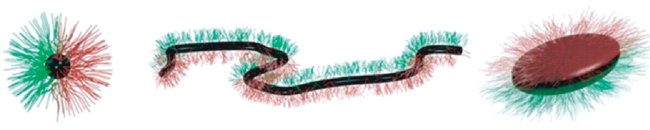
Bottlebrush polymers are a class of comb polymers that have the unique side chain structures and properties. Functional bottlebrush polymers have found broad applications in photonic crystals, surfactants, pharmaceutical carriers, antifouling coatings and smart materials. The synthetic strategies to bottlebrush polymers by ring-opening metathesis polymerization (ROMP) exhibit various advantages, such as simple synthesis steps, high polymer graft density and uniform side chain composition. Well control of polymer composition, molecular weight and molecular weight dispersity could be achieved by ROMP. This review summarizes the synthesis of homo, block, Janus, core-shell bottlebrush copolymers via ROMP. Moreover, the advances in finely controlling the bottlebrush polymer architecture are discussed.
Key words: bottlebrush polymers ; ring-opening metathesis polymerization ; copolymers
| [1] |
Sheiko S S , Sumerlin B S , Matyjaszewski K . Prog. Polym. Sci., 2008,33:759.
|
| [2] |
Hadjichristidis N , Pitsikalis M , Iatrou H , Pispas S . Macromol. Rapid Commun., 2003,24:979. http://doi.wiley.com/10.1002/%28ISSN%291521-3927
|
| [3] |
Verduzco R , Li X , Pesek S L , Stein G E . Chem. Soc. Rev., 2015,44:2405. https://www.ncbi.nlm.nih.gov/pubmed/25688538
DOI: 10.1039/c4cs00329b PMID: 25688538 Bottlebrush polymers are a type of branched or graft polymer with polymeric side-chains attached to a linear backbone, and the unusual architectures of bottlebrushes provide a number of unique and potentially useful properties. These include a high entanglement molecular weight, enabling rapid self-assembly of bottlebrush block copolymers into large domain structures, the self-assembly of bottlebrush block copolymer micelles in a selective solvent even at very low dilutions, and the functionalization of bottlebrush side-chains for recognition, imaging, or drug delivery in aqueous environments. This review article focuses on recent developments in the field of bottlebrush polymers with an emphasis on applications of bottlebrush copolymers. Bottlebrush copolymers contain two (or more) different types of polymeric side-chains. Recent work has explored the diverse properties and functions of bottlebrush polymers and copolymers in solutions, films, and melts, and applications explored include photonic materials, bottlebrush films for lithographic patterning, drug delivery, and tumor detection and imaging. We provide a brief introduction to bottlebrush synthesis and physical properties and then discuss work related to: (i) bottlebrush self-assembly in melts and bulk thin films, (ii) bottlebrushes for photonics and lithography, (iii) bottlebrushes for small molecule encapsulation and delivery in solution, and (iv) bottlebrush micelles and assemblies in solution. We briefly discuss three potential areas for future research, including developing a more quantitative model of bottlebrush self-assembly in the bulk, studying the properties of bottlebrushes at interfaces, and investigating the solution assembly of bottlebrush copolymers. |
| [4] |
Guo J , Peng L , Yuan J . Eur. Polym. J., 2015,69:449.
|
| [5] |
Müllner M . Macromol. Chem. Phys., 2016,217:2209.
|
| [6] |
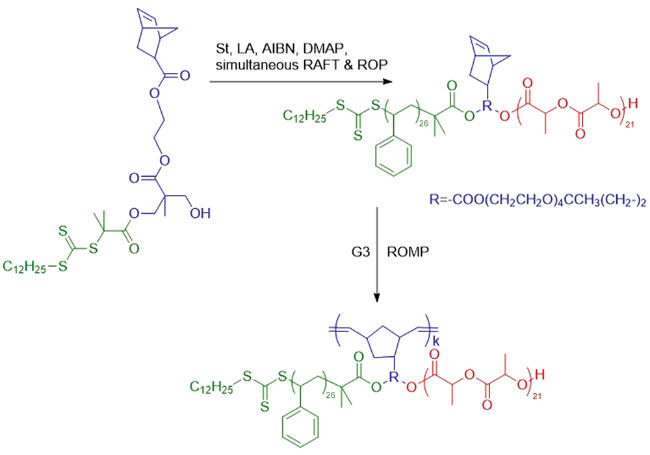
Liberman-Martin A L , Chu C K , Grubbs R H . Macromol. Rapid Commun., 2017,38:1700058.
|
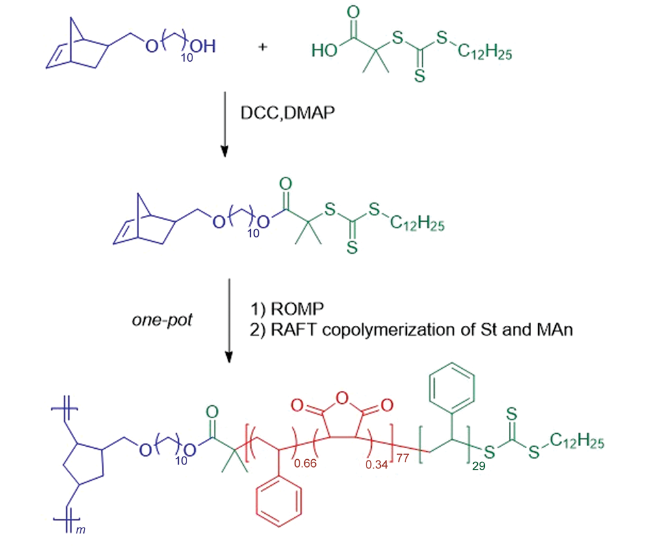
| [7] |
Krivorotova T , Radzevicius P , Makuska R . Eur. Polym. J., 2015,66:543.
|
| [8] |
Nese A , Sheiko S S , Matyjaszewski K . Eur. Polym. J., 2011,47:1198.
|
| [9] |
Jia J , Liu C , Wang L , Liang X , Chai X . Chem. Eng. J., 2018,347:631.
|
| [10] |
Müllner M , Müller A H E . Polymer, 2016,98:389.
|
| [11] |
Rzayev J . ACS Macro Lett., 2012,1:1146.
|
| [12] |
Zhang A , Guo Y . Chem. Eur. J., 2008,14:8939. https://www.ncbi.nlm.nih.gov/pubmed/18696526
DOI: 10.1002/chem.200801191 PMID: 18696526 Polymer bottlebrushes with monodisperse oligoproline side chains were efficiently synthesized, and the conformation of the peptide side chains in different solvents was investigated. Polymers with number-average degrees of polymerization (DPn) of 89 and 366 were obtained by polymerization of the macromonomer in iPrOH/MeCN (1:1) and hexafluoroisopropanol, respectively. Circular dichroism (CD) spectra of the bottlebrush polymers in the neutral and charged states reveal that the oligoproline side chains attain stable polyproline II (PPII) helical conformations not only in aqueous solution, but also in aliphatic alcohol solutions. Dense attachment of oligopeptides onto a linear polymer chain did not lead to an increase in helix content. The possible effects of the main-chain length on the conformational stability were examined. The switching between the polyproline I (PPI) and PPII helical conformations for the oligoproline side chains in aliphatic alcohol solutions is believed to be inhibited by the overcrowded structure in the polymer bottlebrushes. |
| [13] |
Li W , Zhang X , Wang J , Qiao X , Liu K , Zhang A . J. Polym. Sci. Pol. Chem., 2012,50:4063.
|
| [14] |
Pelras T , Mahon C S , Mullner M . Angew. Chem. Int. Ed., 2018,57:6982. https://www.ncbi.nlm.nih.gov/pubmed/29484797
DOI: 10.1002/anie.201711878 PMID: 29484797 Polymer science is rapidly advancing towards the precise construction of synthetic macromolecules of formidable complexity. Beyond the impressive advances in control over polymer composition and uniformity enabled by the living polymerisation revolution, the introduction of compartmentalisation within polymer architectures can elevate their functionality beyond that of their constituent parts, thus offering immense potential for the production of tailor-made nanomaterials. In this Minireview, we discuss synthetic routes to complex molecular brushes with discrete chemical compartments and highlight their potential in the development of advanced materials with applications in nanofabrication, optics and functional materials. |
| [15] |
Bielawski C W , Grubbs R H . Prog. Polym. Sci., 2007,32:1.
|
| [16] |
Leitgeb A , Wappel J , Slugovc C . Polymer, 2010,51:2927. https://linkinghub.elsevier.com/retrieve/pii/S0032386110004039
|
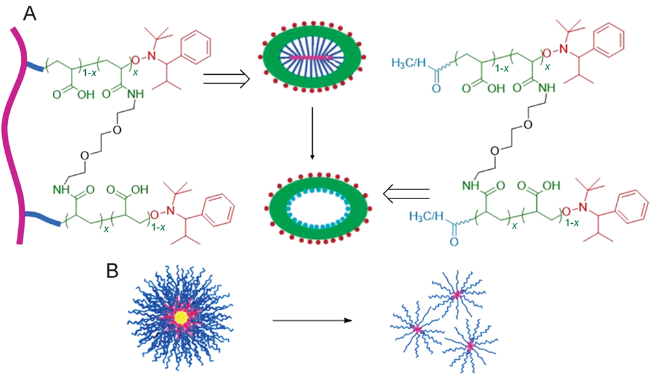
| [17] |
Le D , Morandi G , Legoupy S , Pascual S , Montembault V , Fontaine L . Eur. Polym. J., 2013,49:972.
|
| [18] |
Zhou C , Wang Y , Zhao L , Liu Z , Cheng J . Eur. Polym. J., 2019,112:60.
|
| [19] |
赵健(Zhao J), 吕英莹(Lv Y Y), 胡友良(Hu Y L). 化学进展(Progress in Chemistry), 2001,13:48.
|
| [20] |
Bazan G C , Khosravi E , Schrock R R , Feast W J , Gibson V C , Oregan M B , Thomas J K , Davis W M . J. Am. Chem. Soc., 1990,112:8378.
|
| [21] |
Schrock R R . Dalton Trans., 2011,40:7484. https://www.ncbi.nlm.nih.gov/pubmed/21547311
DOI: 10.1039/c1dt10215j PMID: 21547311 Three of the four possible structures for polymers formed from an achiral monomer through a single ROMP polymerization step have been prepared for a small collection of monomers. Trans,syndiotactic structures have been prepared through chain end control, cis,isotactic polymers have been prepared through enantiomorphic site control, and cis,syndiotactic polymers have been prepared through stereogenic metal control. Stereogenic metal control at the metal center as a means of forming syndiotactic polymers is virtually unknown. Synthesis of ROMP polymers with a regular structure that contain alternating enantiomers from a racemic mixture of monomers is a natural consequence of stereogenic metal control. Ruthenium catalysts do not display ROMP specificities analogous to those described here, perhaps since alkylidene isomers have not been observed for Ru catalysts and the barrier to rotation of the carbene in a generic NHC dichloride Ru catalyst has been calculated to be relatively low. |
| [22] |
Nguyen S T , Johnson L K , Grubbs R H , Ziller J W . J. Am. Chem. Soc., 1992,114:3974.
|
| [23] |
Scholl M , Ding S , Lee C W , Grubbs R H . Org. Lett., 1999,1:953. https://www.ncbi.nlm.nih.gov/pubmed/10823227
DOI: 10.1021/ol990909q PMID: 10823227 [formula: see text] A new family of 1,3-dimesityl-4,5-dihydroimidazol-2-ylidene-substituted ruthenium-based complexes 9a-c has been prepared starting from RuCl2(=CHPh)(PCy3)2 2. These air- and water-tolerant complexes were shown to exhibit an increased ring-closing metathesis activity at elevated temperature when compared to that of the parent complex 2 and the previously developed complex 3. In many instances the activity of these complexes also rivaled or exceeded that of the alkoxy-imido molybdenum complex 1. Catalyst loadings of as low as 0.05 mol% could be used. |
| [24] |
Vougioukalakis G C , Grubbs R H . Chem. Rev., 2010,110:1746. https://www.ncbi.nlm.nih.gov/pubmed/20000700
DOI: 10.1021/cr9002424 PMID: 20000700 |
| [25] |
Bielawski C W , Grubbs R H . Angew. Chem. Int. Ed., 2000,39:2903. https://www.ncbi.nlm.nih.gov/pubmed/11028004
DOI: 10.1002/1521-3773(20000818)39:16<2903::aid-anie2903>3.0.co;2-q PMID: 11028004 |
| [26] |
Cruz T R , Silva R A N , Machado A E H , Lima-Neto B S , Goi B E P , Carvalho V . New J. Chem., 2019,43:6220.
|
| [27] |
Grubbs R H . Angew. Chem. Int. Ed., 2006,45:3760. https://www.ncbi.nlm.nih.gov/pubmed/16724297
DOI: 10.1002/anie.200600680 PMID: 16724297 |
| [28] |
Schrock R R , Hoveyda A H . Angew. Chem. Int. Ed., 2003,42:4592. https://www.ncbi.nlm.nih.gov/pubmed/14533149
DOI: 10.1002/anie.200300576 PMID: 14533149 Catalytic olefin metathesis has quickly emerged as one of the most often-used transformations in modern chemical synthesis. One class of catalysts that has led the way to this significant development are the high-oxidation-state alkylidene complexes of molybdenum. In this review key observations that resulted in the discovery and development of molybdenum- and tungsten-based metathesis catalysts are outlined. An account of the utility of molybdenum catalysts in the synthesis of biologically significant molecules is provided as well. Another focus of the review is the use of chiral molybdenum complexes for enantioselective synthesis. These highly efficient catalysts provide unique access to materials of exceptional enantiomeric purity and often without generating solvent waste. |
| [29] |
张勇杰(Zhang Y J), 李化毅(Li H Y), 董金勇(Dong J Y), 胡友良(Hu Y L). 化学进展(Progress in Chemistry), 2014,26:110.
|
| [30] |
张磊(Zhang L), 李文(Li W), 张阿方(Zhang A F). 化学进展(Progress in Chemistry), 2006,18:939.
|
| [31] |
Nikovia C , Theodoridis L , Alexandris S , Bilalis P , Hadjichristidis N , Floudas G , Pitsikalis M . Macromolecules, 2018,51:8940.
|
| [32] |
Wang Y , Ren R , Ling J , Sun W , Shen Z . Polymer, 2018,138:378.
|
| [33] |
Teo Y C , Xia Y . Macromolecules, 2018,52:81.
|
| [34] |
Radzinski S C , Foster J C , Chapleski R C , Troya D , Matson J B . J. Am. Chem. Soc., 2016,138:6998. https://www.ncbi.nlm.nih.gov/pubmed/27219866
DOI: 10.1021/jacs.5b13317 PMID: 27219866 Control over bottlebrush polymer synthesis by ring-opening metathesis polymerization (ROMP) of macromonomers (MMs) is highly dependent on the competition between the kinetics of the polymerization and the lifetime of the catalyst. We evaluated the effect of anchor group chemistry-the configuration of atoms linking the polymer to a polymerizable norbornene-on the kinetics of ROMP of polystyrene and poly(lactic acid) MMs initiated by (H2IMes)(pyr)2(Cl)2Ru═CHPh (Grubbs third generation catalyst). We observed a variance in the rate of propagation of >4-fold between similar MMs with different anchor groups. This phenomenon was conserved across all MMs tested, regardless of solvent, molecular weight (MW), or repeat unit identity. The observed >4-fold difference in propagation rate had a dramatic effect on the maximum obtainable backbone degree of polymerization, with slower propagating MMs reducing the maximum bottlebrush MW by an order of magnitude (from ∼10(6) to ∼10(5) Da). A chelation mechanism was initially proposed to explain the observed anchor group effect, but experimental and computational studies indicated that the rate differences likely resulted from a combination of varying steric demands and electronic structure among the different anchor groups. The addition of trifluoroacetic acid to the ROMP reaction substantially increased the propagation rate for all anchor groups tested, likely due to scavenging of the pyridine ligands. Based on these data, rational selection of the anchor group is critical to achieve high MM conversion and to prepare pure, high MW bottlebrush polymers by ROMP grafting-through. |
| [35] |
Chang A B , Lin T P , Thompson N B , Luo S X , Liberman-Martin A L , Chen H Y , Lee B , Grubbs R H . J. Am. Chem. Soc., 2017,139:17683. https://www.ncbi.nlm.nih.gov/pubmed/29117478
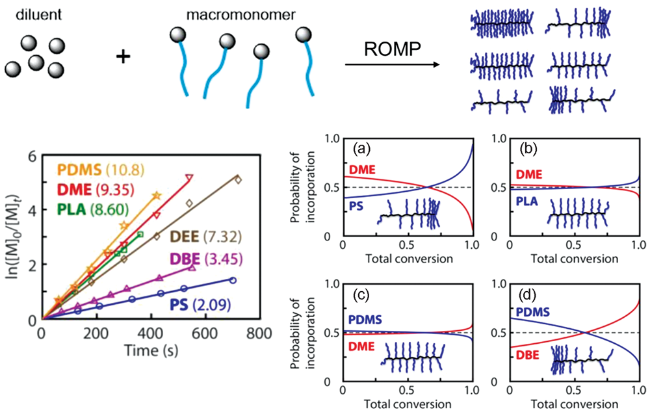
DOI: 10.1021/jacs.7b10525 PMID: 29117478 -1 s-1 < khomo < 82 M-1 s-1). Rate trends were identified and elucidated by complementary mechanistic and density functional theory (DFT) studies. Building on this foundation, complex architectures were achieved through copolymerizations of selected diluents with a poly(d,l-lactide) (PLA), polydimethylsiloxane (PDMS), or polystyrene (PS) macromonomer. The cross-propagation rate constants were obtained by nonlinear least-squares fitting of the instantaneous comonomer concentrations according to the Mayo-Lewis terminal model. In-depth kinetic analyses indicate a wide range of accessible macromonomer/diluent reactivity ratios (0.08 < r1/r2 < 20), corresponding to blocky, gradient, or random backbone sequences. We further demonstrated the versatility of this copolymerization approach by synthesizing AB graft diblock polymers with tapered, uniform, and inverse-tapered molecular "shapes." Small-angle X-ray scattering analysis of the self-assembled structures illustrates effects of the graft distribution on the domain spacing and backbone conformation. Collectively, the insights provided herein into the ROMP mechanism, monomer design, and homo- and copolymerization rate trends offer a general strategy for the design and synthesis of graft polymers with arbitrary architectures. Controlled copolymerization therefore expands the parameter space for molecular and materials design.]]> |
| [36] |
Sukegawa T , Masuko I , Oyaizu K , Nishide H . Macromolecules, 2014,47:8611.
|
| [37] |
Xu Y , Wang W , Wang Y , Zhu J , Uhrig D , Lu X , Keum J K , Mays J W , Hong K . Polym. Chem., 2016,7:680.
|
| [38] |
Foster J C , Radzinski S C , Lewis S E , Slutzker M B , Matson J B . Polymer, 2015,79:205.
|
| [39] |
Fu Q , Ren J M , Qiao G G . Polym. Chem., 2012,3:343.
|
| [40] |
Radzinski S C , Foster J C , Matson J B . Macromol. Rapid Commun., 2016,37:616. https://www.ncbi.nlm.nih.gov/pubmed/26847467
DOI: 10.1002/marc.201500672 PMID: 26847467 Bottlebrush polymers are synthesized using a tandem ring-opening polymerization (ROP) and ring-opening metathesis polymerization (ROMP) strategy. For the first time, ROP and ROMP are conducted sequentially in the same pot to yield well-defined bottlebrush polymers with molecular weights in excess of 10(6) Da. The first step of this process involves the synthesis of a polylactide macromonomer (MM) via ROP of d,l-lactide initiated by an alcohol-functionalized norbornene. ROMP grafting-through is then carried out in the same pot to produce the bottlebrush polymer. The applicability of this methodology is evaluated for different MM molecular weights and bottlebrush backbone degrees of polymerization. Size-exclusion chromatographic and (1)H NMR spectroscopic analyses confirm excellent control over both polymerization steps. In addition, bottlebrush polymers are imaged using atomic force microscopy and stain-free transmission electron microscopy on graphene oxide. |
| [41] |
Yang B , Abel B A McCormick C L , Storey R F . Macromolecules, 2017,50:7458.
|
| [42] |
Arrington K J , Radzinski S C , Drummey K J , Long T E , Matson J B . ACS Appl. Mater. Interfaces, 2018,10:26662. https://www.ncbi.nlm.nih.gov/pubmed/30062885
DOI: 10.1021/acsami.8b08480 PMID: 30062885 Dynamically cross-linkable bottlebrush polymer adhesives were synthesized by the grafting-from strategy through a combination of ring-opening metathesis polymerization (ROMP) and photoiniferter polymerization. A norbornene-containing trithiocarbonate was first polymerized by ROMP to form the bottlebrush polymer backbone; this was followed by blue-light-mediated photoiniferter polymerization of butyl acrylate initiated by the poly(trithiocarbonate) to form the bottlebrush polymer. This strategy afforded well-defined bottlebrush polymers with molar masses in excess of 11 000 kg/mol. For un-cross-linked bottlebrush polymers, 180° peel tests revealed a cohesive failure mode and showed similar peel strengths (∼30 g/mm) regardless of the backbone polymer degree of polymerization (DP). The bottlebrush polymers were then treated with butylamine to remove the trithiocarbonate, liberating thiols on each side-chain terminus. In the presence of oxygen, these thiols readily cross-linked via disulfide bond formation. The cross-linked bottlebrush polymers with a backbone DP of 400 showed a greater than sixfold improvement in peel strength, whereas those with a backbone DP of 100 exhibited a twofold enhancement compared with un-cross-linked samples along with a change to adhesive failure. Triphenylphosphine readily reduced the disulfide bonds, effectively removing all cross-links in the bottlebrush network and allowing for recasting of the adhesive, which showed similar adhesive and rheological properties to the original un-cross-linked samples. |
| [43] |
van As D , Subbiah J , Jones D J , Wong W W H . Macromol. Chem. Phys., 2016,217:403.
|
| [44] |
Lanson D , Ariura F , Schappacher M , Borsali R , Deffieux A . Macromolecules, 2009,42:3942.
|
| [45] |
Su L , Heo G S , Lin Y N , Dong M , Zhang S , Chen Y , Sun G , Wooley K L . J. Polym. Sci. Pol. Chem., 2017,55:2966.
|
| [46] |
Yamauchi Y , Yamada K , Horimoto N N , Ishida Y . Polymer, 2017,120:68.
|
| [47] |
Sun G , Cho S , Clark C , Verkhoturov S V , Eller M J , Li A , Pavia-Jimenez A , Schweikert E A , Thackeray J W , Trefonas P , Wooley K L . J. Am. Chem. Soc., 2013,135:4203. https://www.ncbi.nlm.nih.gov/pubmed/23480169
DOI: 10.1021/ja3126382 PMID: 23480169 We describe a high-resolution, high-sensitivity negative-tone photoresist technique that relies on bottom-up preassembly of differential polymer components within cylindrical polymer brush architectures that are designed to align vertically on a substrate and allow for top-down single-molecule line-width imaging. By applying cylindrical diblock brush terpolymers (DBTs) with a high degree of control over the synthetic chemistry, we achieved large areas of vertical alignment of the polymers within thin films without the need for supramolecular assembly processes, as required for linear block copolymer lithography. The specially designed chemical compositions and tuned concentric and lengthwise dimensions of the DBTs enabled high-sensitivity electron-beam lithography of patterns with widths of only a few DBTs (sub-30 nm line-width resolution). The high sensitivity of the brush polymer resists further facilitated the generation of latent images without postexposure baking, providing a practical approach for controlling acid reaction/diffusion processes in photolithography. |
| [48] |
Miyake G M , Piunova V A , Weitekamp R A , Grubbs R H . Angew. Chem. Int. Ed., 2012,51:11246. https://www.ncbi.nlm.nih.gov/pubmed/22976479
DOI: 10.1002/anie.201205743 PMID: 22976479 Colorful: enabled by their reduced capacity for chain entanglement, high-molecular-weight brush block copolymers can rapidly self-assemble to photonic crystals. The blending of two polymers of different molecular weight can predictably modulate the sizes of the polymer domains, giving rise to a facile means of precision tuning of these photonic-band-gap materials. |
| [49] |
Yu Y G , Chae C G , Kim M J , Seo H B , Grubbs R H , Lee J S . Macromolecules, 2018,51:447.
|
| [50] |
梁晨(Liang C) Master Dissertation of Changchun University of Science and Technology(长春理工大学硕士学位论文), 2016.
|
| [51] |
Qiao Y , Zhao Y , Yuan X , Zhao Y , Ren L . J. Mater. Sci., 2018,53:16160.
|
| [52] |
Song D P , Li C , Colella N S , Lu X , Lee J H , Watkins J J . Adv. Optical Mater., 2015,3:1169.
|
| [53] |
Song D P , Li C , Li W , Watkins J J . ACS Nano, 2016,10:1216. https://www.ncbi.nlm.nih.gov/pubmed/26713452
DOI: 10.1021/acsnano.5b06525 PMID: 26713452 Photonic crystals (PhCs) prepared using the self-assembly of block copolymers (BCPs) offer the potential for simple and rapid device fabrication but typically suffer from low refractive index contrast (Δn ≤ 0.1) between the phase-segregated domains. Here, we report the simple fabrication of BCP-based photonic nanocomposites with large differences in refractive index (Δn > 0.27). Zirconium oxide (ZrO2) nanoparticles coated with gallic acid are used to tune the optical constants of the target domains of self-assembled (polynorbornene-graft-poly(tert-butyl acrylate))-block-(polynorbornene-graft-poly(ethylene oxide)) (PtBA-b-PEO) brush block copolymers (BBCPs). Strong hydrogen-bonding interactions between the ligands on ZrO2 and PEO brushes of the BBCPs enable selective incorporation and high loading of up to 70 wt % (42 vol %) of the ZrO2 nanoparticles within the PEO domain, resulting in a significant increase of refractive index from 1.45 to up to 1.70. Consequently, greatly enhanced reflection at approximately 398 nm (increases of ∼250%) was observed for the photonic nanocomposites (domain spacing = 137 nm) relative to that of the unmodified BBCPs, which is consistent with numeric modeling results using transfer matrix methods. This work provides a simple strategy for a wide range tuning of optical constants of BCP domains, thereby enabling the design and creation of high-performance photonic coatings for various applications. The large refractive index contrast enables high reflectivity while simultaneously reducing the coating thickness necessary, compared to pure BCP systems. |
| [54] |
Song D P , Jacucci G , Dundar F , Naik A , Fei H F , Vignolini S , Watkins J J . Macromolecules, 2018,51:2395. https://www.ncbi.nlm.nih.gov/pubmed/29681653
DOI: 10.1021/acs.macromol.7b02288 PMID: 29681653 Despite a huge variety of methodologies having been proposed to produce photonic structures by self-assembly, the lack of an effective fabrication approach has hindered their practical uses. These approaches are typically limited by the poor control in both optical and mechanical properties. Here we report photonic thermosetting polymeric resins obtained through brush block copolymer (BBCP) self-assembly. We demonstrate that the control of the interplay between order and disorder in the obtained photonic structure offers a powerful tool box for designing the optical appearance of the polymer resins in terms of reflected wavelength and scattering properties. The obtained materials exhibit excellent mechanical properties with hardness up to 172 MPa and Young's modulus over 2.9 GPa, indicating great potential for practical uses as photonic coatings on a variety of surfaces. |
| [55] |
Song D P , Zhao T H , Guidetti G , Vignolini S , Parker R M . ACS Nano, 2019,13:1764. https://www.ncbi.nlm.nih.gov/pubmed/30620557
DOI: 10.1021/acsnano.8b07845 PMID: 30620557 Hierarchical, structurally colored materials offer a wide variety of visual effects that cannot be achieved with standard pigments or dyes. However, their fabrication requires simultaneous control over multiple length-scales. Here we introduce a robust strategy for the fabrication of hierarchical photonic pigments via the confined self-assembly of bottlebrush block copolymers within emulsified microdroplets. The bottlebrush block copolymer self-assembles into highly ordered concentric lamellae, giving rise to a near perfect photonic multilayer in the solid state, with reflectivity up to 100%. The reflected color can be readily tuned across the whole visible spectrum by either altering the molecular weight or by blending the bottlebrush block copolymers. Furthermore, the developed photonic pigments are responsive, with a selective and reversible color change observed upon swelling in different solvents. Our system is particularly suited for the scalable production of photonic pigments, arising from their rapid self-assembly mechanism and size-independent color. |
| [56] |
Yao Q , Gutierrez D C , Hoang N H , Kim D , Wang R , Hobbs C , Zhu L . Mol. Pharmaceutics, 2017,14:2378. https://www.ncbi.nlm.nih.gov/pubmed/28605595
DOI: 10.1021/acs.molpharmaceut.7b00278 PMID: 28605595 The novel self-assembling bottlebrush polyethylene glycol-polynorbornene-thiocresol block copolymers (PEG-PNB-TC) were synthesized by the ring opening metathesis polymerization (ROMP), followed by functionalization of the polymer backbone via the thio-bromo "click" postpolymerization strategy. The PEG-PNB-TC copolymers could easily self-assemble into the nanoscale core-shell polymeric micelles. The hydrophobic anticancer drugs, such as paclitaxel (PTX), could be loaded into their hydrophobic core to form a stable drug-loaded micelle with a superior drug loading capacity of up to ∼35% (w/w). The sustained drug release behavior of the PEG-PNB-TC micelles was observed under a simulated "sink condition". Compared with commercial PTX formulation (Taxol), the PTX-loaded PEG-PNB-TC micelles showed the enhanced in vitro cellular uptake and comparable cytotoxicity in the drug-sensitive cancer cells, while the copolymers were much safer than Cremophor EL, the surfactant used in Taxol. Furthermore, curcumin (CUR), a natural chemotherapy drug sensitizer, was successfully coloaded with PTX into the PEG-PNB-TC micelles. High drug loading capacity of the PEG-PNB-TC micelles allowed for easy adjustment of drug doses and the ratio of the coloaded drugs. The combination of PTX and CUR showed synergistic anticancer effect in both the drug mixture and drug coloaded micelles at high CUR/PTX ratio, while low CRU/PTX ratio only exhibited additive effects. The combinatorial effects remarkably circumvented the PTX resistance in the multidrug resistant (MDR) cancer cells. Due to the easy polymerization and functionalization, excellent self-assembly capability, high drug loading capability, and great stability, the PEG-PNB-TC copolymers might be a promising nanomaterial for delivery of the hydrophobic anticancer drugs, especially for combination drug therapy. |
| [57] |
Meng C S , Yan Y K , Wang W . Polym. Chem., 2017,8:6824.
|
| [58] |
Chae C G , Yu Y G , Seo H B , Kim M J , Mallela Y L N K , Lee J S . Macromolecules, 2019,52:1912.
|
| [59] |
Pesek S L , Lin Y H , Mah H Z , Kasper W , Chen B , Rohde B J , Robertson M L , Stein G E , Verduzco R . Polymer, 2016,98:495. https://linkinghub.elsevier.com/retrieve/pii/S0032386116300581
|
| [60] |
You L , Ling J . Macromolecules, 2014,47:2219.
|
| [61] |
Li Y , Bai T , Li Y , Ling J . Macromol. Chem. Phys., 2017,218:1600450.
|
| [62] |
Shah M , Yang Z , Li Y , Jiang L , Ling J . Polymers, 2017,9:559.
|
| [63] |
Li Y , von der Lühe M , Schacher F H , Ling J . Macromolecules, 2018,51:4938.
|
| [64] |
Qiu H , Yang Z , Shah M I , Mao Z , Ling J . Polymer, 2017,128:71.
|
| [65] |
Li Y , Schacher F H , Ling J . Macromol. Rapid Commun., 2019,40:1800905.
|
| [66] |
Walther A , Müller A H E . Soft Matter, 2008,4:663.
|
| [67] |
Li Y , Themistou E , Zou J , Das B P , Tsianou M , Cheng C . ACS Macro Lett., 2011,1:52.
|
| [68] |
刘一寰(Liu Y H), 胡欣(Hu X), 朱宁(Zhu N), 郭凯(Guo K). 化学进展(Progress in Chemistry), 2018,30:1133.
|
| [69] |
Ruhland T M , Groschel A H , Ballard N , Skelhon T S , Walther A , Muller A H , Bon S A . Langmuir, 2013,29:1388. https://www.ncbi.nlm.nih.gov/pubmed/23311383
DOI: 10.1021/la3048642 PMID: 23311383 We investigate the self-assembly behavior of Janus particles with different geometries at a liquid-liquid interface. The Janus particles we focus on are characterized by a phase separation along their major axis into two hemicylinders of different wettability. We present a combination of experimental and simulation data together with detailed studies elucidating the mechanisms governing the adsorption process of Janus spheres, Janus cylinders, and Janus discs. Using the pendant drop technique, we monitor the assembly kinetics following changes in the interfacial tension of nanoparticle adsorption. According to the evolution of the interfacial tension and simulation data, we will specify the characteristics of early to late stages of the Janus particle adsorption and discuss the effect of Janus particle shape and geometry. The adsorption is characterized by three adsorption stages which are based on the different assembly kinetics and different adsorption mechanisms depending on the particle shape. |
| [70] |
Burts A O , Gao A X , Johnson J A . Macromol. Rapid Commun., 2014,35:168. https://www.ncbi.nlm.nih.gov/pubmed/24265215
DOI: 10.1002/marc.201300618 PMID: 24265215 This report describes the synthesis of miktoarm brush-arm star polymers (BASPs) from branched and linear norbornene-terminated macromonomers (MMs) via the brush-first ring-opening metathesis polymerization (ROMP) method. First, a polystyrene (PS)-branch-poly(lactic acid) (PLA) MM is synthesized via a combination of atom transfer radical polymerization (ATRP), tin(II)-mediated ring opening polymerization, and copper-catalyzed azide-alkyne cycloaddition reactions. Graft-through ROMP of this MM followed by in situ cross-linking with a photo-cleavable bis-norbornene derivative provided nanoscopic BASPs with photodegradable cores and a precise 1:1 PS:PLA arm composition. Three-miktoarm BASPs are prepared in an analogous manner via copolymerization of the same PS-branch-PLA MM with a poly(ethylene glycol) (PEG) MM prior to cross-linking. Intramolecular phase segregation of these miktoarm BASPs is characterized by transmission electron microscopy (TEM); a UV-induced structural rearrangement from three-faced Janus particles to micelles is observed. |
| [71] |
Nguyen H V , Gallagher N M , Vohidov F , Jiang Y , Kawamoto K , Zhang H , Park J V , Huang Z , Ottaviani M F , Rajca A , Johnson J A . ACS Macro Lett., 2018,7:472. https://www.ncbi.nlm.nih.gov/pubmed/30271675
DOI: 10.1021/acsmacrolett.8b00201 PMID: 30271675 exo-norbornene imide capable of efficient coupling with various nucleophiles and azides to produce diversely functionalized branched macromonomers optimized for ring-opening metathesis polymerization (ROMP). In addition, we describe an efficient iterative procedure for the synthesis of tri-and tetra-valent branched macromonomers. We demonstrate the use of these branched macromonomers for the synthesis of Janus bottlebrush block copolymers as well as for the generation of bottlebrush polymers with up to three conjugated small molecules per repeat unit. This work significantly expands the scalability and diversity of nanostructured macromolecules accessible via ROMP.]]> |
| [72] |
Cheng C , Qi K , Khoshdel E , Wooley K L . J. Am. Chem. Soc., 2006,128:6808. https://www.ncbi.nlm.nih.gov/pubmed/16719459
DOI: 10.1021/ja061892r PMID: 16719459 Core-shell brush copolymers were prepared on the basis of a tandem synthetic strategy and used as single molecular templates for the preparation of polymeric nanomaterials. An alkoxyamine-functionalized norbornene monomer was prepared and then polymerized by ring-opening metathesis polymerization. The well-defined polymer (Mn = 122 kDa, Mw/Mn = 1.13) contained one alkoxyamine functionality per repeat unit and was then used as a polyfunctional macroinitiator for sequential nitroxide-mediated radical polymerizations of isoprene and tert-butyl acrylate. The resulting well-defined brush copolymer (Mn = 1410 kDa, Mw/Mn = 1.23) was transformed to an amphiphilic core-shell brush copolymer comprising poly(isoprene)-b-poly(acrylic acid) grafts by hydrolysis. Subsequent cross-linking of the poly(acrylic acid) block segments afforded peripherally cross-linked brush copolymer nanostructures, which served, finally, as templates for hollowed nanoscale frameworks by ozonolysis of the poly(isoprene)-based cores. Each transformation led to dramatic changes in the nanoscale composition and structure which were detected by combinations of spectroscopic measurements, atomic force microscopy imaging in the solid state, and/or dynamic light-scattering characterization in aqueous solution. |
| [73] |
Cheng C , Khoshdel E , Wooley K L . Macromolecules, 2007,40:2289.
|
| [74] |
Onbulak S , Rzayev J . J. Polym. Sci. Pol. Chem., 2017,55:3868.
|
| [75] |
Johnson J A , Lu Y Y , Burts A O , Xia Y , Durrell A C , Tirrell D A , Grubbs R H . Macromolecules, 2010,43:10326. https://www.ncbi.nlm.nih.gov/pubmed/21532937
DOI: 10.1021/ma1021506 PMID: 21532937 Graft-through ring-opening metathesis polymerization (ROMP) using ruthenium N-heterocyclic carbene catalysts has enabled the synthesis of bottle-brush polymers with unprecedented ease and control. Here we report the first bivalent-brush polymers; these materials were prepared by graft-through ROMP of drug-loaded polyethylene-glycol (PEG) based macromonomers (MMs). Anticancer drugs doxorubicin (DOX) and camptothecin (CT) were attached to a norbornene-alkyne-PEG MM via a photocleavable linker. ROMP of either or both drug-loaded MMs generated brush homo- and co-polymers with low polydispersities and defined molecular weights. Release of free DOX and CT from these materials was initiated by exposure to 365 nm light. All of the CT and DOX polymers were at least 10-fold more toxic to human cancer cells after photoinitiated drug release while a copolymer carrying both CT and DOX displayed 30-fold increased toxicity upon irradiation. Graft-through ROMP of drug-loaded macromonomers provides a general method for the systematic study of structure-function relationships for stimuli-responsive polymers in biological systems. |
| [76] |
Liu J , Burts A O , Li Y , Zhukhovitskiy A V , Ottaviani M F , Turro N J , Johnson J A . J. Am. Chem. Soc., 2012,134:16337.
|
| [77] |
Zhang H , Hadjichristidis N . Macromolecules, 2016,49:1590.
|
| [78] |
Radzinski S C , Foster J C , Matson J B . Polym. Chem., 2015,6:5643.
|
| [79] |
Radzinski S C , Foster J C , Lewis S E , French E V , Matson J B . Polym. Chem., 2017,8:1636.
|
| [80] |
Sarapas J M , Chan E P , Rettner E M , Beers K L . Macromolecules, 2018,51:2359.
|
| [81] |
Lin T P , Chang A B , Chen H Y , Liberman-Martin A L , Bates C M , Voegtle M J , Bauer C A , Grubbs R H . J. Am. Chem. Soc., 2017,139:3896. https://www.ncbi.nlm.nih.gov/pubmed/28221030
DOI: 10.1021/jacs.7b00791 PMID: 28221030 x-ran-DME1-x)n bearing variable grafting densities (x = 1.0, 0.75, 0.5, 0.25) and total backbone degrees of polymerization (n = 167, 133, 100, 67, 33) were synthesized. The approach disclosed in this work therefore constitutes a powerful strategy for the synthesis of polymers spanning the linear-to-bottlebrush regimes with controlled grafting density and side chain distribution, molecular attributes that dictate micro- and macroscopic properties.]]> |
| [82] |
Teo Y C , Xia Y . Macromolecules, 2015,48:5656.
|
| [83] |
Radzinski S C , Foster J C , Scannelli S J , Weaver J R , Arrington K J , Matson J B . ACS Macro Lett., 2017,6:1175.
|
/
| 〈 |
|
〉 |