文章编号: 2019020314
文献标识码: A
层状双氢氧化物(LDHs)的合成与应用
Layered Double Hydroxides(LDHs): Synthesis & Applications
Received:8 May 2018
rev-requestrev-request:9 Jul. 2018
Online:22 Oct. 2018
Copyright
Saba Jamil , Afaaf Rahat Alvi , Shanza Rauf Khan , Muhammad Ramzan Saeed Ashraf Janjua . 层状双氢氧化物(LDHs)的合成与应用[J]. 化学进展, 2019 , 31(2/3) : 394 -412 . DOI: 10.7536/PC180505
Saba Jamil , Afaaf Rahat Alvi , Shanza Rauf Khan , Muhammad Ramzan Saeed Ashraf Janjua . Layered Double Hydroxides(LDHs): Synthesis & Applications[J]. Progress in Chemistry, 2019 , 31(2/3) : 394 -412 . DOI: 10.7536/PC180505
Layered double hydroxides, a class of anionic clays possessing sandwich like structure in which negative anions are sandwiched into positively charged metal layers in a repeating manner, have been studied extensively. Layered double hydroxides could be fabricated with combination of different divalent(Cd2+, Mn2+, Fe2+, Pb2+) and trivalent(Al3+, Cr3+, Fe3+) metals and layered arrangement imparts unique properties such as adsorption properties and catalytic properties in these compounds. Exciting feature of these compounds is the memory effect. There are a number of methods to synthesize these layered compounds, such as co-precipitation, hydrothermal, sol-gel, urea hydrolysis, etc. The synthesized LDHs can be characterized morphologically and compositionally i.e. scanning electron microscopy, transmission electron microscopy, powder X-Ray diffraction, Mossbauer spectroscopy, thermogravimetric analysis, XPS, etc. The wonderful feature of layered double hydroxides is the pliancy of interlayer space enabling them to accommodate various anionic species, and high surface area making them efficient in numerous applications such as adsorbents, anion exchange, catalysts, and biological compatible.
Key words: layered double hydroxides(LDHs) ; application
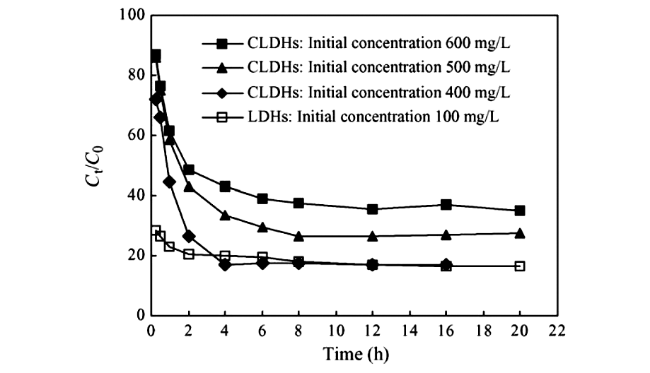
Fig.6 Effect of contact time on the uptake of Brilliant Blue R(BBR) by layered double hydroxides(LDHs) and calcined LDHs(CLDHs) at different initial concentrations[43] |
| Mineral | Structural Formula | Intercalated ion | Cell Parameters(Å) | Space Group |
|---|---|---|---|---|
| Fougerite | Fe42+Fe23+(OH)12[CO3]·3H2O | OH-, Cl-, CO32- are possible | a=3.17~3.18 c=22.7~22.9 | R$\bar{3}$m |
| Meixnerite | [Mg6Al2(OH)16][(OH-)2.4H2O] | OH- | a=3.046 c=22.93 | R$\bar{3}$m |
| Zincowoodwardite | Zn1-xAlx(OH)2[SO4]x/2·nH2O x<0.5, n<3x/2 | SO42- | a=3.063 c=8.91 and a=3.065 c=25.45 | P$\bar{3}$m and R$\bar{3}$m |
| Hydrotalcite | [Mg6Al2(OH)16][(CO32-)·4H2O] | CO32- | a=6.13 c=46.15 | R$\bar{3}$m |
| Pyroaurite | [Mg6Fe3+(OH)16][(CO32-)·4H2O] | CO32- | a=6.19 c=46.54 | R$\bar{3}$m |
| Mössbauerite | Fe63+O4(OH)8[CO3]·3H2O | CO32- | a=3.07 c=22.25 | R$\bar{3}$m |
| Charmarite | Mn4Al2(OH)12[CO3]·3H2O | CO32- | a=10.98 c=15.10 | P6322 |
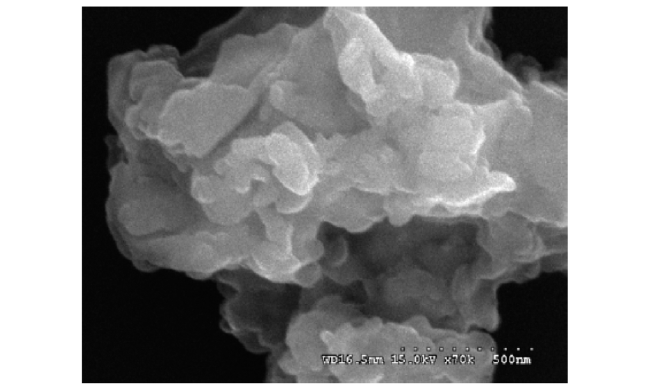
Fig.13 The SEM micrographs of the(a) ZnAl-4,(b) CZnAl-4-300 C and(c) CZnAl-4-500 C sample. The arrows in the left figures indicate where the enlargements(in the right figures) were taken. The marked spots(in the right figures) indicate the part taken for the EDX measurements[69] |
Fig.17 SEM micrographs of(A)unmodified LDH,(B)LDH-laurate,(C)LDH-SDS,(D)=LDH-SDBS; and(E)LDH-BEHP(the magnification bar indicates 2 μm length)[14] |
Table 2 A brief literature of layered double hydroxide with different metal combinations |
| Metals-anion | Preparation methods | Charac. techniques | ref |
|---|---|---|---|
| Ca-Al-NO3 | Co-precipitation | PXRD, FTIR | 96 |
| Co-Fe-OH Co-Fe-OH/CO32- (pyroaurite group) | Topochemical synthesis Co-precipitation method | XRD, SEM, TEM, AFM XRD, FTIR, Mossbauer spectroscopy, DTA | 97 98 |
| Co-La-CH3COO- | hydrogen peroxide catalyzed hydrolysis reaction | FTIR, PXRD, TGA, PL spectroscopy | 99 |
| Cu-Al- CO32- | Hydrothermal approach | FTIR, PXRD, TGA | 100 |
| Zn-Cr-Cl-/CO32-/NO3- | Co-precipitation | UV-VIS analysis, PXRD, FTIR | 101, 102 |
| Zn-Ti-NO3 Zn-Al-CO3 Zn-Al-CO32-/NO3- | Co-precipitation Co-precipitation Co-precipitation at low supersaturation | TEM, SEM, PXRD, XPS SEM, TGA, PXRD, TEM SEM, XRD, EDX, IR, TG/DTG | 103 56 104 |
| Ni-Fe-Cl | Topochemical synthesis | SEM, TEM, PXRD, XPS, FTIR | 105 |
| Mn-Al-CO32-/NO3-/SO42-/Cl- | Co-precipitation | PXRD, FTIR, DTA/TG, SEM | 106 |
| NiTi-CO32- | Co-precipitation at high supersaturation | PXRD, SEM, ICP-AES, FTIR | 68 |
| Mg-Al-CO32- | Hydrothermal approach Urea hydrolysis | SEM, XRD, TGA, FTIR XRD, FTIR, BET | 71, 72, 84, 83 |
| Zn-Al LDH films | Urea hydrolysis Sol-gel route | XRD, SEM, TEM XRD, SEM | 81 89 |
| Ni-Al/Mg-Al-CO32- | Sol-Gel method | XRD, SEM, TEM, HRTEM | 90 |
| Zn-Al LDH | Sol-gel method | XRD, TG-DSC | 91 |
| Mg-Al/Ga/In | Sol-gel method | FTIR, XRD, DRIFT | 94 |
| Ni-Co-Al/Mg-Ni-Al | Sol-gel method | XRD, TEM, TGA-DTA | 95 |
| [1] |
Dong X, Jing Q, Shi Y, Yang Z, Pan S, Poeppelmeier K R, Young J, Rondinelli J M . J. Am. Chem. Soc., 2015,137:9417. https://www.ncbi.nlm.nih.gov/pubmed/26147880
DOI: 10.1021/jacs.5b05406 PMID: 26147880 Pb(II) has long been associated with lone pair activity and is often substituted in alkali earth metal borates to create new nonlinear optical (NLO) materials with enhanced second harmonic generation (SHG) capabilities. However, large enhancement in isomorphic Pb-free analogues is rare. Here we report a new NLO material Pb2Ba3(BO3)3Cl with a phase-matching SHG response approximately 3.2× that of KDP and 6× higher than its isomorphic compound Ba5(BO3)3Cl. We show that the enhanced SHG response originates from a unique edge-sharing connection between lead-oxygen polyhedra and boron-oxygen groups, making the dielectric susceptibility more easily affected by the external electric field of an incident photon. This understanding provides a route to identify systems that would benefit from SHG-active cation substitution in isomorphic structures that exhibit weak or null SHG responses. |
| [2] |
Vaccari A . Catal. Today, 1998,41:53.
|
| [3] |
Carretero M, Gomes C, Tateo F . Develop. Clay Sci., 2006,1:717.
|
| [4] |
Wu H, Pan S, Poeppelmeier K R, Li H, Jia D, Chen Z, Fan X, Yang Y, Rondinelli J M, Luo H . J. Am. Chem. Soc., 2011,133:7786. https://www.ncbi.nlm.nih.gov/pubmed/21534555
DOI: 10.1021/ja111083x PMID: 21534555 Introduction of the Cl(-) anion in the borate systems generates a new perovskite-like phase, K(3)B(6)O(10)Cl, which exhibits a large second harmonic response, about four times that of KH(2)PO(4) (KDP), and is transparent from the deep UV (180 nm) to middle-IR region. K(3)B(6)O(10)Cl crystallizes in the noncentrosymmetric and rhombohedral space group R3m. The structure consists of the A-site hexaborate [B(6)O(10)] groups and the BX(3) Cl-centered octahedral [ClK(6)] groups linked together through vertices to form the perovskite framework represented by ABX(3). |
| [5] |
Matike D, Ekosse G, Ngole V . Intl. J. Phys. Sci., 2011,6:7557.
|
| [6] |
Shi G, Wang Y, Zhang F, Zhang B, Yang Z, Hou X, Pan S, Poeppelmeier K R . J. Am. Chem. Soc., 2017,139:10645. https://www.ncbi.nlm.nih.gov/pubmed/28726399
DOI: 10.1021/jacs.7b05943 PMID: 28726399 2BO3F2 (KBBF) is a unique nonlinear optical material for generation of deep-ultraviolet coherent light; however, its industrial application is limited. Here, we report a new material NH4B4O6F, which exhibits a wide deep-ultraviolet transparent range and suitable birefringence that enables frequency doubling below 200 nm. NH4B4O6F possesses large nonlinear coefficients about 2.5 times that of KBBF. In addition, it is easy to grow bulk crystals and does not contain toxic elements.]]> |
| [7] |
Wu H, Yu H, Yang Z, Hou X, Su X, Pan S, Poeppelmeier K R, Rondinelli J M . J. Am. Chem. Soc., 2013,135:4215. https://www.ncbi.nlm.nih.gov/pubmed/23448539
DOI: 10.1021/ja400500m PMID: 23448539 The generation of intense coherent deep-UV light from nonlinear optical materials is crucial to applications ranging from semiconductor photolithography and laser micromachining to photochemical synthesis. However, few materials with large second harmonic generation (SHG) and a short UV-cutoff edge are effective down to 200 nm. A notable exception is KBe2BO3F2, which is obtained from a solid-state reaction of highly toxic beryllium oxide powders. We designed and synthesized a benign polar material, Ba4B11O20F, that satisfies these requirements and exhibits the largest SHG response in known borates containing neither lone-pair-active anions nor second-order Jahn-Teller-active transition metals. We developed a microscopic model to explain the enhancement, which is unexpected on the basis of conventional anionic group theory arguments. Crystal engineering of atomic displacements along the polar axis, which are difficult to attribute to or identify within unique anionic moieties, and greater cation polarizabilities are critical to the design of next-generation SHG materials. |
| [8] |
Wang Y, Zhang B, Yang Z, Pan S . Angew. Chem., 2018,130:2172. https://www.ncbi.nlm.nih.gov/pubmed/18220399
DOI: 10.1021/ja710665q PMID: 18220399 |
| [9] |
López-Galindo A, Viseras C, Cerezo P . Appl. Clay Sci., 2007,36:51.
|
| [10] |
Tateo F, Summa V, Bonelli C, Bentivenga G . Appl. Clay Sci., 2001,20:97.
|
| [11] |
Wang X, Wang Y, Zhang B, Zhang F, Yang Z, Pan S . Angew. Chem., 2017,129:14307.
|
| [12] |
Zhang B, Shi G, Yang Z, Zhang F, Pan S . Angew. Chem. Int. Ed., 2017,56:3916. https://www.ncbi.nlm.nih.gov/pubmed/28251767
DOI: 10.1002/anie.201700540 PMID: 28251767 2 BO3 F2 suffers high toxicity through beryllium and strong layered growth. Herein, we propose a beryllium-free material design and synthesis strategy for DUV NLO materials. Introducing the (BO3 F)4- , (BO2 F2 )3- , and (BOF3 )2- groups in borates could break through the fixed 3D B-O network that would produce a larger birefringence without layering and simultaneously keep a short cutoff edge down to DUV. The theoretical and experimental studies on a series of fluorooxoborates confirm this strategy. Li2 B6 O9 F2 is identified as a DUV NLO material with a large second harmonic generation efficiency (0.9×KDP) and a large predicted birefringence (0.07) without layering. This study provides a feasible way to break down the DUV wall for NLO materials.]]> |
| [13] |
Rajamathi M, Thomas G S, Kamath P V . J. Chem. Sci., 2001,113:671.
|
| [14] |
Costa F R, Leuteritz A, Wagenknecht U, Jehnichen D, Haeussler L, Heinrich G . Appl. Clay Sci., 2008,38:153.
|
| [15] |
Yu H, Wu H, Pan S, Yang Z, Su X, Zhang F . J. Mater. Chem., 2012,22:9665.
|
| [16] |
Del Hoyo C . Appl. Clay Sci., 2007,36:103.
|
| [17] |
Nalawade P, Aware B, Kadam V, Hirlekar R . Amsterdam:Elsevier, 2009,64.
|
| [18] |
Li S, Bai H, Wang J, Jing X, Liu Q, Zhang M, Chen R, Liu L, JiÅ C . Chem. Eng. J., 2012,193:372.
|
| [19] |
Mishra G, Dash B, Pandey S . Appl. Clay Sci., 2018,153:172.
|
| [20] |
Hashim N, Sharif S N, Hussein M Z, Isa I M, Kamari A, Mohamed A, Ali N M, Bakar S A, Mamat M . Mater. Res. Innov., 2017,21:129.
|
| [21] |
Trolard F, Bourrié G . London: InTech., 2012,60.
|
| [22] |
De Roy A, Forano C, Besse J . United States: Nova Science, 2001,1.
|
| [23] |
De Roy A . Mol. Crys. Liq. Crys., 1998,311:173.
|
| [24] |
Antonyraj C, Koilraj P, Srinivasan K . United States: Nova Science, 2012,1.
|
| [25] |
Leroux F, Adachi-Pagano M, Intissar M, Chauvière S, Forano C, Besse J P . United States: Nova Science, 2001,1.
|
| [26] |
O’Leary S, O’Hare D, Seeley G . Chem. Commun., 2002: 1506.
|
| [27] |
Wang Q O’Hare D . Chem. Rev., 2012,112:4124. https://www.ncbi.nlm.nih.gov/pubmed/22452296
DOI: 10.1021/cr200434v PMID: 22452296 |
| [28] |
Hibino T, Kobayashi M . J. Mater. Chem., 2005,15:653.
|
| [29] |
Hibino T . Chem. Mater., 2004,16:5482.
|
| [30] |
Liu Z, Ma R, Osada M, Iyi N, Ebina Y, Takada K, Sasaki T . J. Am. Chem. Soc., 2006,128:4872. https://www.ncbi.nlm.nih.gov/pubmed/16594724
DOI: 10.1021/ja0584471 PMID: 16594724 This paper describes a systematic study on the synthesis, anion exchange, and delamination of Co-Al layered double hydroxide (LDH), with the aim of achieving fabrication and clarifying the properties of LDH nanosheet/polyanion composite films. Co-Al-CO3 LDH hexagonal platelets of 4 mum in lateral size were synthesized by the urea method under optimized reaction conditions. The as-prepared CO3(2-)-LDH was converted to Cl- -LDH by treating with a NaCl-HCl mixed solution, retaining its high crystallinity and hexagonal platelike morphology. LDHs intercalated with a variety of anions (such as NO3-, ClO4-, acetate, lactate, dodecyl sulfate, and oleate) were further prepared from Cl- -LDH via an anion-exchange process employing corresponding salts. Exchanged products in various anion forms were found to show different delamination behaviors in formamide. Among them, best results were observed for NO3- -LDH in terms of the exfoliating degree and the quality of the exfoliated nanosheets. The delamination gave a pink transparent suspension containing well-defined nanosheets with lateral sizes of up to 2 microm. The resulting nanosheets were assembled layer-by-layer with an anionic polymer, poly(sodium styrene 4-sulfonate) (PSS), onto quartz glass substrates to produce composite films. Magnetic circular dichroism (MCD) measurements revealed that the assembled multilayer films exhibited an interesting magneto-optical response. |
| [31] |
Cavani F, Trifiro F, Vaccari A . Catal. Today, 1991,11:173.
|
| [32] |
Valente J S, Lima E, Toledo-Antonio J A, Cortes-Jacome M A, Lartundo-Rojas L, Montiel R, Prince J . J. Phys. Chem. C, 2010,114:2089.
|
| [33] |
Forano C, Costantino U, Prévot V, Gueho C T . Amsterdam: Elsevier, 2012,1.
|
| [34] |
You Y, ZhÅ H, Vance G F . Appl. Clay Sci., 2002,21:217.
|
| [35] |
El Gaini L, Lakraimi M, Sebbar E, Meghea A, Bakasse M . J. Hazard. Mater., 2009,161:627. https://www.ncbi.nlm.nih.gov/pubmed/18573613
DOI: 10.1016/j.jhazmat.2008.04.089 PMID: 18573613 Layered double hydroxides (LDHs) calcined, denoted as CLDHs, have been shown to recover their original layered structure in the presence of appropriate anions. In the light of this so-called &quot;memory effect&quot;, the removal of indigo carmine (IC), an anionic dye, from aqueous solution by calcined Mg-Al-CO(3) LDHs was investigated in batch mode. We looked at the influence of pH values, dye-adsorbent contact time, initial dye concentration and various temperatures of heating of LDHs on the decolorization rate of IC. The adsorption isotherms, described by Freundlich model are L-type. The characterization of the solids CLDHs, both fresh and after removal of IC, by X-ray diffraction and infrared spectroscopy shows that the IC adsorption on CLDHs is enhanced by reconstruction of a matrix hydrotalcite intercaled by the dye, and the intercalation of the organic ion was clearly evidenced by the net increase in the basal spacing from 0.76 nm for [Mg-Al-CO(3)] to 2.13 nm for the organic derivative. |
| [36] |
Extremera R, Pavlovic I, Pérez M, Barriga C . Chem. Eng. J., 2012,213:392.
|
| [37] |
Cheng X, Huang X, Wang X, Sun D . J. Hazard. Mater., 2010,177:516. https://www.ncbi.nlm.nih.gov/pubmed/20060217
DOI: 10.1016/j.jhazmat.2009.12.063 PMID: 20060217 The influence of calcination of Zn-Al layered double hydroxides (LDHs) on their phosphate adsorption capacity was studied in order to improve phosphorus removal from an excess sludge liquor. Powder X-ray diffraction (XRD), Fourier transform infrared (FTIR) spectroscopy, scanning electron microscopy (SEM), thermogravimetry-differential scanning calorimetry (TG-DSC) and nitrogen adsorption-desorption were employed to characterize the raw Zn-Al and the calcined products. The results reveal that the Zn-Al LDHs evolved to a phase of mixed metal oxides with the calcination temperature increasing to 300 degrees C and finally to spinel ZnAl(2)O(4) at 600 degrees C. When the Zn-Al was calcined at 300 degrees C, the interlayer carbonate ions were removed and the greatest BET surface area of 81.20 m(2)/g was achieved. The tested phosphate adsorption capacities of the raw and calcined Zn-Al were closely related to the evolution of physicochemical properties of the LDHs during the calcination. The Zn-Al-300 (Zn-Al LDHs calcined at 300 degrees C) exhibited the highest P uptake of 41.26 mg P/g in 24h. The phosphate adsorption by the raw Zn-Al and the Zn-Al-300 both follows a pseudo-second-order kinetic model; the adsorption isotherms show a good fit with a Langmuir-type equation. |
| [38] |
Laguna H, Loera S, Ibarra I A, Lima E, Vera M A, Lara V . Micropor. Mesopor. Mater., 2007,98:234.
|
| [39] |
Chibwe K, Jones W . Chem. Mater., 1989,1:489.
|
| [40] |
Prévot V, Forano C, Besse J P . Appl. Clay. Sci., 2001,18:3.
|
| [41] |
Chibwe K, Jones W . Chem. Commun., 1989,926.
|
| [42] |
Aisawa S, Hirahara H, Ishiyama K, Ogasawara W, Umetsu Y, Narita E . J. Solid State Chem., 2003,174:342.
|
| [43] |
Zhu M X, Li Y P, Xie M, Xin H Z . J. Hazard. Mater., 2005,120:163. https://www.ncbi.nlm.nih.gov/pubmed/15811678
DOI: 10.1016/j.jhazmat.2004.12.029 PMID: 15811678 Layered double hydroxides (LDHs) with a Mg/Al molar ratio of 2:1 were synthesized by using a co-precipitation method and their calcined products (CLDHs) were obtained by heating Mg/Al-LDHs at 500 degrees C. Sorption of a weak acid dye, Brilliant Blue R (BBR), by LDHs and CLDHs indicated equilibrium time required for BBR sorption by CLDHs was less than 12h, regardless of initial concentration of BBR, whereas BBR sorption by LDHs was longer than 20 h. Sorption capacity of CLDHs was much larger than that of LDHs. Therefore, CLDHs could be used to remove anionic dyes of relatively high concentrations while LDHs may only be used to remove anionic dyes of low concentrations. Isotherms for BBR sorption by CLDHs and LDHs were well described using the Freundlich and Langmuir equations, respectively. When the initial pH of BBR solutions was lower than 8.0, the final pH of the solution after sorption was enhanced and stabilized at 10.6-10.8. The effect of initial pH (&lt;8.0) on BBR removal was negligible, which would be environmentally important for precipitation/co-precipitation of co-existing metal cations. The effects of both Cl- and SO4(2-) on BBR sorption by CLDHs were minimal; but the presence of CO(3)2- markedly reduced BBR removal. Thermal regeneration for re-use of LDHs and CLDHs after BBR sorption was feasible only within the first two cycles, after which the regenerated materials suffered from a large loss in their sorption capacities. |
| [44] |
Auerbach S M, Carrado K A, Dutta P K. . United States: CRC Press. 2004,1.
|
| [45] |
Wang J D, Serrette G, Tian Y, Clearfield A . Appl. Clay. Sci., 1995,10:103.
|
| [46] |
Kwon T, Tsigdinos G A, Pinnavaia T J . J. Am. Chem. Soc., 1988,110:3653.
|
| [47] |
Wang J, Tian Y, Wang R C, Clearfield A . Chem. Mater., 1992,4:1276.
|
| [48] |
Weir M R, Kydd R A . Micropor. Mesopor. Mater., 1998,20:339.
|
| [49] |
Tatsumi T, Yamamoto K, Tajima H, Tominaga H O . Chem. Lett., 1992,21:815.
|
| [50] |
Tatsumi T, Tajima H, Yamamoto K, Tominaga H . Amsterdam: Elsevier, 1993,1.
|
| [51] |
Corma A, Fornes V, Rey F, Cervilla A, Llopis E, Ribera A . J. Catal., 1995,152:237.
|
| [52] |
Braterman P, Xu Z, Yarberry F . Amsterdam: Elsevier, 2004,1
|
| [53] |
Tichit D, Fajula F . Amsterdam: Elsevier, 1999,1
|
| [54] |
Carja G, Nakamura R, Aida T, Niiyama H . Micropor. Mesopor. Mater., 2001,47:275.
|
| [55] |
Yun S K, Pinnavaia T J . Chem. Mater., 1995,7:348.
|
| [56] |
Rives V . United States: Nova Publishers, 2001,1.
|
| [57] |
Costa F, Satapathy B, Wagenknecht U, Weidisch R, Heinrich G . Eur. Polym. J., 2006,42:2140.
|
| [58] |
Wang J, You J, Li Z, Yang P, Jing X, Zhang M . Nanoscale Res. Lett., 2008,3:338.
|
| [59] |
Carja G, Chiriac H, Lupu N . J. Mag. Magn. Mater., 2007,311:26.
|
| [60] |
Pérez-Ramírez J, Ribera A, Kapteijn F, Coronado E, Gómez-García C J . J. Mater. Chem., 2002,12:2370.
|
| [61] |
Milanovic N . Amsterdam: Elsevier, 2016,1
|
| [62] |
Almansa J J, Coronado E, Martí-Gastaldo C, Ribera A . European J. Inorgan. Chem., 2008,2008:5642.
|
| [63] |
Mills S, Christy A, Génin J M, Kameda T, Colombo F . Mineral. Mag., 2012,76:1289.
|
| [64] |
Miyata S . Clays. Clay Miner., 1975,23:369.
|
| [65] |
Duan X, Evans D G . United States: Springer, 2009,1.
|
| [66] |
Aisawa S, Takahashi S, Ogasawara W, Umetsu Y, Narita E . Clay Sci., 2000,11:317.
|
| [67] |
Bauer J, Behrens P, Speckbacher M, Langhals H . Adv. Func. Mater., 2003,13:241.
|
| [68] |
Zhang W, Guo X, He J, Qian Z . J. European Ceram. Soc., 2008,28:1623.
|
| [69] |
Seftel E, Popovici E, Mertens M, De Witte K, Van Tendeloo G, Cool P, Vansant E . Micropor. Mesopor. Mater., 2008,113:296.
|
| [70] |
Ogawa M, Asai S . Chem. Mater., 2000,12:3253.
|
| [71] |
Kovanda F, Koloušek D, Cílová Z, Hulínský V . Appl. Clay Sci., 2005,28:101.
|
| [72] |
Sharma S K, Kushwaha P K, Srivastava V K, Bhatt S D, Jasra R V . Indus. Eng. Chem. Res., 2007,46:4856.
|
| [73] |
Bravo-Suárez J J, Páez-Mozo E A, Oyama S T . Quimica Nova, 2004,27:601.
|
| [74] |
Xu Z P, Lu G Q . Chem. Mater., 2005,17:1055.
|
| [75] |
Zhao Y, Xiao F, Jiao Q . J. Nanotechnol., 2011,646409.
|
| [76] |
Carlino S . Solid State Ion., 1997,98:73.
|
| [77] |
Choy J H, Choi S J, Oh J M, Park T . Appl. Clay Sci., 2007,36:122.
|
| [78] |
Israëli Y, Taviot-Guého C, Besse J P, Morel J P, Morel-Desrosiers N . Dalton Trans., 2000,791.
|
| [79] |
Costantino U, Nocchetti M, Sisani M, Vivani R . Int. J. Mater. 2009,224:273.
|
| [80] |
Bullo Saifullah M Z B H . Intl. J. Nanomed., 2015,10:5609.
|
| [81] |
Guo X, Zhang F, Evans D G, Duan X . Chem. Commun., 2010,46:5197. https://www.ncbi.nlm.nih.gov/pubmed/20549015
DOI: 10.1039/c0cc00313a PMID: 20549015 Layered double hydroxide (LDH) films have been widely investigated in the last few years because of their promising applications in areas such as catalysis, anti-corrosion coatings for metals, and as components in optical, electrical, and magnetic devices. In this Feature Article we review recent work, from our own laboratory and elsewhere, on the synthesis, properties and applications of functional LDH films, and also offer some perspectives for the design of future multifunctional LDH films. |
| [82] |
Han Y, Liu Z H, Yang Z, Wang Z, Tang X, Wang T, Fan L, Ooi K . Chem. Mater., 2007,20:360.
|
| [83] |
Ogawa M, Kaiho H . Langmuir, 2002,18:4240.
|
| [84] |
Adachi-Pagano M, Forano C, Besse J P . J. Mater. Chem., 2003,13:1988.
|
| [85] |
Benito P, Herrero M, Barriga C, Labajos F, Rives V . Inorg. Chem., 2008,47:5453. https://www.ncbi.nlm.nih.gov/pubmed/18494464
DOI: 10.1021/ic7023023 PMID: 18494464 The use of urea as a precipitating agent in the synthesis of Ni-Al and Zn-Al layered double hydroxides having a hydrotalcite-like structure via a microwave-hydrothermal method is reported. For comparison purposes, the samples were also prepared by a conventional hydrothermal method. Ni-Al compounds with the hydrotalcite-like structure were obtained in shorter periods of time by the microwave method than by the conventional method, whereas when zinc cations were involved, no successful synthesis was achieved regardless of the method used. In order to find the best synthesis conditions for the Ni-Al solids, samples were submitted to microwave-hydrothermal treatment at different temperatures for increasing periods of time, and the structural, thermal, and textural properties of the synthesized materials were evaluated. All of the solids were fully characterized by chemical elemental analysis, powder X-ray diffraction (PXRD), FT-IR spectroscopy, and transmission and scanning electron microscopy as well as by N 2 adsorption/desorption at -196 degrees C for assessment of specific surface area and porosity. The PXRD patterns showed that the layered structure appeared after merely 10 min when the synthesis was carried out at 125 degrees C; however, the FT-IR spectra showed the presence of some cyanate groups that were formed during urea hydrolysis and were quite difficult to remove completely. When the conventional hydrothermal treatment was used, longer periods of time were required in order to develop the hydrotalcite-like structure, but increasing the aging time improved the crystallinity of the compounds and yielded large particles. |
| [86] |
Dunn B, Zink J I . J. Am. Chem. Soc., 2007,122:11834
|
| [87] |
Huang J, Kunitake T . J. Am. Chem. Soc., 2003,125:11834. https://www.ncbi.nlm.nih.gov/pubmed/14505402
DOI: 10.1021/ja037419k PMID: 14505402 Surface sol-gel process was used to replicate the hierarchical morphology of natural cellulosic substances with nanometer precision. The resultant artificial fossils are ceramic nanomaterials composed of metal oxide nanotubes. |
| [88] |
Weatherspoon M R, Cai Y, Crne M, Srinivasarao M, Sandhage K H . Angew. Chem. Intl. Ed., 2008,47:7921. https://www.ncbi.nlm.nih.gov/pubmed/18773402
DOI: 10.1002/anie.200801311 PMID: 18773402 |
| [89] |
Zhao Y, He S, Wei M, Evans D G, Duan X . Chem. Commun., 2010,46:3031. https://www.ncbi.nlm.nih.gov/pubmed/20386858
DOI: 10.1039/b926906a PMID: 20386858 Layered double hydroxides (LDHs) films with hierarchical morphologies have been fabricated on different templates via the sol-gel nanocopying and in situ growth process, which exhibit desirable mechanical properties and high adaptability in water treatment. |
| [90] |
Prinetto F, Ghiotti G, Graffin P, Tichit D . Micropor. Mesopor. Mater., 2000,39:229.
|
| [91] |
Tichit D, Lorret O, Coq B, Prinetto F, Ghiotti G . Micropor. Mesopor. Mater., 2005,80:213.
|
| [92] |
Tokumoto M S, Pulcinelli S H, Santilli C V, Briois V . J. Phys. Chem. B, 2003,107:568.
|
| [93] |
Prevot V, Forano C, Besse J . Chem. Mater., 2005,17:6695.
|
| [94] |
Aramendıa M A, Borau V, Jiménez C, Marinas J M, Ruiz J R, Urbano F J . J. Solid State Chem., 2002,168:156.
|
| [95] |
Prince J, Montoya A, Ferrat G, Valente J S . Chem. Mater., 2009,21:5826.
|
| [96] |
Rojas R . Appl. Clay Sci., 2014,87:254.
|
| [97] |
Ma R, Liu Z, Takada K, Iyi N, Bando Y, Sasaki T . J. Am. Chem. Soc., 2007,129:5257. https://www.ncbi.nlm.nih.gov/pubmed/17394321
DOI: 10.1021/ja0693035 PMID: 17394321 This paper describes a topochemical synthetic approach to Co2+-Fe3+ layered double hydroxides (LDHs). Micrometer-sized hexagonal platelets of brucite-like Co2/3Fe1/3(OH)2 were first prepared by a homogeneous precipitation of an aqueous solution of divalent cobalt and ferrous ions through hexamethylenetetramine (HMT) hydrolysis under a nitrogen gas atmosphere. A subsequent oxidative intercalation process, by the action of iodine (I2) in chloroform (CHCl3), transformed the precursory brucite-like Co2+-Fe2+ hydroxides into hydrotalcite-like Co2+-Fe3+ LDHs, in which the oxidization of Fe2+ into Fe3+ induced positive charges to the octahedral hydroxyl layers while anions (I-) were intercalated into the interlayer space. Co2+-Fe3+ LDHs inherited the high crystallinity and hexagonal platelet morphology from their brucite-like precursor due to the topotactic nature of the transformation, which was verified by abundant microscopic and spectroscopic characterizations. After a normal ion-exchange process, Co2+-Fe3+ LDHs accommodating perchlorate anions were exfoliated into unilamellar nanosheets in formamide by an ultrasonic treatment. |
| [98] |
Hansen H C B, Koch C B, Taylor R M . J. Solid State Chem., 1994,113:46.
|
| [99] |
Meenakshi P, Sitharaman U, Rajamani N . J. Rare Earths, 2017,35:474.
|
| [100] |
Britto S, Kamath P V . J. Solid State Chem., 2009,182:1193.
|
| [101] |
Delgado R R, Vidaurre M A, de Pauli C, Ulibarri M, Avena M . J. Colloid Interf. Sci., 2004,280:431.
|
| [102] |
Hirata N, Tadanaga K, Tatsumisago M . Mater. Res. Bull., 2015,62:1.
|
| [103] |
Shao M, Han J, Wei M, Evans D G, Duan X . Chem. Eng. J., 2011,168:519.
|
| [104] |
Seftel E, Popovici E, Mertens M, de Witte K, van Tendeloo G, Cool P, Vansant E . Micropor. Mesopor. Mater, 2008,113:296.
|
| [105] |
Li Y, Li H, Yang M, He X, Ni P, Kang L, Liu Z H . Appl. Clay Sci., 2011,52:51.
|
| [106] |
Aisawa S, Hirahara H, Uchiyama H, Takahashi S, Narita E . J. Solid State Chem., 2002,167:152. https://linkinghub.elsevier.com/retrieve/pii/S0022459602996374
|
| [107] |
Yao W, Yu S, Wang J, Zou Y, Lu S, Ai Y, Alharbi N S, Alsaedi A, Hayat T, Wang X . Chem. Eng. J., 2017,307:476.
|
| [108] |
Ulibarri M, Pavlovic I, Hermosin M, Cornejo J . Appl. Clay Sci., 1995,10:131.
|
| [109] |
Ulibarri M, Pavlovic I, Barriga C, Hermosın M, Cornejo J . Appl. Clay Sci., 2001,18:17.
|
| [110] |
Chaara D, Pavlovic I, Bruna F, Ulibarri M, Draoui K, Barriga C . Appl. Clay Sci., 2010,50:292.
|
| [111] |
Wang S L, Liu C H, Wang M K, Chuang Y H, Chiang P N . Appl. Clay Sci., 2009,43:79.
|
| [112] |
Yang L, Shahrivari Z, Liu P K, Sahimi M, Tsotsis T T . Indus. Eng. Chem. Res., 2005,44:6804. https://pubs.acs.org/doi/10.1021/ie049060u
DOI: 10.1021/ie049060u |
| [113] |
Chao Y F, Chen P C, Wang S L . Appl. Clay Sci., 2008,40:193. https://linkinghub.elsevier.com/retrieve/pii/S0169131707001585
|
| [114] |
Li S S, Jiang M, Jiang T J, Liu J H, Guo Z, Huang X J . J. Hazard. Mater., 2017,338:1. https://www.ncbi.nlm.nih.gov/pubmed/28531655
DOI: 10.1016/j.jhazmat.2017.05.017 PMID: 28531655 -1 over the range from 0.03 to 1.0μM under the optimized conditions. Otherwise, the selectivity, anti-interference, stability measurements and practical implications of Fe/Mg/Ni-LDH modified GCE are also performed. What,s more, a reasonable mechanism of detection for Pb(II) including selectivity and sensitivity is proposed based on adsorption and characterized using XPS and XRD. These findings provide a potentially excellent material to improve the sensitivity and selectivity for toxic metal ions as well as a deep understanding of detection.]]> |
| [115] |
Pshinko G . J. Chem., 2013,2013.
|
| [116] |
Ardau C, Frau F, Nieddu G, Fanfani L . Water Mining Environ., 2007,385.
|
| [117] |
Goswamee R L, Sengupta P, Bhattacharyya K G, Dutta D K . Appl. Clay Sci., 1998,13:21.
|
| [118] |
Koilraj P, Kannan S . Chem. Eng. J., 2013,234:406.
|
| [119] |
Liu X, Zhao X, Zhu Y, Zhang F . Appl. Catal. B Environ., 2013,140:241.
|
| [120] |
De Sá F P, Cunha B N, Nunes L M . Chem. Eng. J., 2013,215:122.
|
| [121] |
Wang Q, O’Hare D . Chem. Commun., 2013,49:6301. https://www.ncbi.nlm.nih.gov/pubmed/23739826
DOI: 10.1039/c3cc42918k PMID: 23739826 A facile method for the synthesis of Zn2Al-borate and Mg3Al-borate layered double hydroxides (LDHs) with extremely high specific surface areas of 458.6 and 263 m(2) g(-1) and containing delaminated nanosheets is reported. To the best of our knowledge, this is the first report of LDH powders that still remain exfoliated on drying. |
| [122] |
Wang Q, Gao Y, Luo J, Zhong Z, Borgna A, Guo Z, O’Hare D . RSC Adv., 2013,3:3414.
|
| [123] |
Gao Y, Zhang Z, Wu J, Yi X, Zheng A, Umar A, O’Hare D, Wang Q . J. Mater. Chem. A, 2013,1:12782.
|
| [124] |
Ling F, Fang L, Lu Y, Gao J, Wu F, Zhou M, Hu B . Micropor. Mesopor. Mater., 2016,234:230.
|
| [125] |
Yang Z, Wang F, Zhang C, Zeng G, Tan X, Yu Z, Zhong Y, Wang H, Cui F . RSC Adv., 2016,6:79415.
|
| [126] |
Daud M, Kamal M S, Shehzad F, Al-Harthi M A . Carbon, 2016,104:241.
|
| [127] |
Fang Q, Chen B . J. Mater. Chem. A, 2014,2:8941.
|
| [128] |
Tan L, Wang Y, Liu Q, Wang J, Jing X, Liu L, Liu J, Song D . Chem. Eng. J., 2015,259:752.
|
| [129] |
Wen T, Wu X, Tan X, Wang X, Xu A . ACS Appl. Interf. Sci., 2013,5:3304.
|
| [130] |
Yuan X, Wang Y, Wang J, Zhou C, Tang Q, Rao X . Chem. Eng. J., 2013,221:204. https://linkinghub.elsevier.com/retrieve/pii/S1385894713001368
|
| [131] |
Zhang F, Song Y, Song S, Zhang R, Hou W . ACS Appl. Interf. Sci., 2015,7:7251.
|
| [132] |
Corma A, Fornes V, Martin-Aranda R, Rey F . J. Catal., 1992,134:58.
|
| [133] |
Yang R, Gao Y, Wang J, Wang Q . Dalton Trans., 2014,43:10317. http://xlink.rsc.org/?DOI=c3dt52896k
DOI: 10.1039/c3dt52896k |
| [134] |
Prinetto F, Ghiotti G, Durand R, Tichit D . J. Phys. Chem. B, 2000,104:11117. https://pubs.acs.org/doi/10.1021/jp002715u
DOI: 10.1021/jp002715u |
| [135] |
Di Cosimo J, Dıez V, Xu M, Iglesia E, Apesteguıa C . J. Catal., 1998,178:499. https://linkinghub.elsevier.com/retrieve/pii/S0021951798921613
|
| [136] |
Takehira K . Appl. Clay Sci., 2017,136:112. https://linkinghub.elsevier.com/retrieve/pii/S0169131716305117
|
| [137] |
Yuan S, Li Y, Zhang Q, Wang H . Colloid. Surf. A, 2009,348:76. https://linkinghub.elsevier.com/retrieve/pii/S0927775709004063
|
| [138] |
Parida K, Satpathy M, Mohapatra L . J. Mater. Chem., 2012,22:7350. http://xlink.rsc.org/?DOI=c2jm15658j
DOI: 10.1039/c2jm15658j |
| [139] |
Zhang L, Li F, Evans D, Duan X . Indus. Eng. Chem. Res., 2010,49:5959. https://pubs.acs.org/doi/10.1021/ie9019193
DOI: 10.1021/ie9019193 |
| [140] |
Dinari M, Momeni M M, Ghayeb Y . J. Mater. Sci., 2016,27:9861.
|
| [141] |
Shu X, He J, Chen D, Wang Y . J. Phys. Chem. C, 2008,112:4151. https://pubs.acs.org/doi/10.1021/jp711091m
DOI: 10.1021/jp711091m |
| [142] |
Zhang L, Xiong Z, Zhao G . Amsterdam: Elsevier, 2015,1.
|
| [143] |
Valente J S, Tzompantzi F, Prince J . Appl. Catal. B Environ., 2011,102:276. https://linkinghub.elsevier.com/retrieve/pii/S0926337310005400
|
| [144] |
Lu R, Xu X, Chang J, Zhu Y, Xu S, Zhang F . Appl. Catal. B Environ., 2012,111:389.
|
| [145] |
Parida K, Mohapatra L . Chem. Eng. J., 2012,179:131. https://linkinghub.elsevier.com/retrieve/pii/S138589471101309X
|
| [146] |
Das N, Tichit D, Durand R, Graffin P, Coq B . Catal. Lett., 2001,71:181. http://link.springer.com/10.1023/A:1009007321914
|
| [147] |
Unnikrishnan R, Narayanan S . J. Mol. Catal. A, 1999,144:173. https://linkinghub.elsevier.com/retrieve/pii/S1381116998003550
|
| [148] |
Tronto J, Crepaldi E L, Pavan P C, Cipriano De Paula C, Valim J B . Mol. Cryst. Liq. Cryst., 2001,356:227. https://www.tandfonline.com/doi/full/10.1080/10587250108023703
|
| [149] |
Choy J H, Oh J M, Park M, Sohn K M, Kim J W . Adv. Mater., 2004,16:1181. http://doi.wiley.com/10.1002/%28ISSN%291521-4095
|
| [150] |
Aisawa S, Takahashi S, Ogasawara W, Umetsu Y, Narita E . J. Solid State Chem., 2001,162:52. https://linkinghub.elsevier.com/retrieve/pii/S0022459601993405
|
| [151] |
Zebda A, Tingry S, Innocent C, Cosnier S, Forano C, Mousty C . Electrochim. Acta, 2011,56:10378. https://linkinghub.elsevier.com/retrieve/pii/S0013468611001757
|
| [152] |
Drezdzon M A . Inorg. Chem., 1988,27:4628. https://www.ncbi.nlm.nih.gov/pubmed/20491106
DOI: 10.1002/anie.201001003 PMID: 20491106 |
| [153] |
Tronto J, dos Reis M J, Silvério F, Balbo V R, Marchetti J M, Valim J B . J. Phys. Chem. Solids, 2004,65:475. https://linkinghub.elsevier.com/retrieve/pii/S0022369703004335
|
| [154] |
Al-Gohary O M, Hosny E A . Pharmaceut. Acta, 1997,72:81.
|
| [155] |
Al-Gohary O M, Al-Kassas R S . Pharmaceut. Acta, 2000,74:351.
|
| [156] |
Wei M, Yuan Q, Evans D G, Wang Z, Duan X . J. Mater. Chem., 2005,15:1197. http://xlink.rsc.org/?DOI=B416068A
DOI: 10.1039/B416068A |
| [157] |
Li F, Jin L, Han J, Wei M, Li C . Indus. Eng. Chem. Res., 2009,48:5590. https://pubs.acs.org/doi/10.1021/ie900043r
DOI: 10.1021/ie900043r |
| [158] |
Shan D, Cosnier S, Mousty C . Analyt. Chem., 2003,75:3872. https://pubs.acs.org/doi/10.1021/ac030030v
DOI: 10.1021/ac030030v |
| [159] |
De Melo J, Cosnier S, Mousty C, Martelet C, Jaffrezic-Renault N . Analyt. Chem., 2002,74:4037. https://www.ncbi.nlm.nih.gov/pubmed/12199571
DOI: 10.1021/ac025627+ PMID: 12199571 Enzyme-based field effect transistors (ENFETs) for urea determination were developed based on the immobilization of urease within two different clay matrixes, one cationic (Laponite) and the other anionic (layered double hydroxide (LDH)), cross-linked with glutaraldehyde. The biosensor based on the enzyme immobilized in Laponite shows a greater sensitivity and smaller dynamic linear range, because the enzymatic reaction is protected from the effect of the buffer capacity of the outer medium. The apparent Michaelis-Menten constant, Km(app), is quite similar for both biosensors. Inhibition of the enzyme by sodium tetraborate was investigated. Tetraborate acts as a competitive inhibitor for urease in the two different types of clay, the inhibitor effect being stronger for the LDH/urease biosensor. In particular, the maximum limit of the dynamic linear range extends from 1.4 mM in the absence of the inhibitor to 12 mM in the presence of 0.5 mM tetraborate. The Km(app) values in the presence of 0.5 mM tetraborate for Laponite and LDH biomembranes were 10 and 62 mM, respectively. Comparison of the inhibition constant values, Ki 0.16 and 0.05 mM for Laponite and LDH biosensors, respectively, clearly indicates a stronger enzyme-inhibitor interaction in the LDH/urease biomembrane. |
| [160] |
Ai H, Huang X, Zhu Z, Liu J, Chi Q, Li Y, Li Z, Ji X . Biosens. Bioelectron., 2008,24:1048. https://linkinghub.elsevier.com/retrieve/pii/S0956566308004089
|
| [161] |
Forano C, Vial S, Mousty C . Curr. Nanosci., 2006,2:283. <![CDATA[http://www.eurekaselect.com/openurl/content.php?genre=article&issn=1573-4137&volume=2&issue=3&spage=283]]>
|
| [162] |
Desigaux L, Belkacem M B, Richard P, Cellier J, Léone P, Cario L, Leroux F, Taviot-Guého C, Pitard B . Nano Lett., 2006,6:199. https://www.ncbi.nlm.nih.gov/pubmed/16464034
DOI: 10.1021/nl052020a PMID: 16464034 The purpose of this study was to control the fabrication of new labile supramolecular assemblies by formulating associations of DNA molecules with inorganic layered double hydroxides (LDHs). The results show that LDH/DNA hybrids synthesized by a coprecipitation route involving the in situ formation of LDHs around DNA molecules acting as templates were characterized by a lamellar organization, with DNA molecules sandwiched between hydroxide layers, exhibiting a regular spacing of 1.96 nm. Our results indicate that labile complexes resulting from the association of nucleic acids and inorganic materials can be obtained not only by anion exchange but also by a direct self-assembly route. |
| [163] |
Oh J M, Kwak S Y, Choy J H . J. Phys. Chem. Solids, 2006,67:1028. https://linkinghub.elsevier.com/retrieve/pii/S0022369706000321
|
| [164] |
Williams G R, O’Hare D . J. Mater. Chem., 2006,16:3065. http://xlink.rsc.org/?DOI=b604895a
DOI: 10.1039/b604895a |
| [165] |
Reddy M R, Xu Z, Lu G, Diniz da Costa J . Indus. Eng. Chem. Res., 2008,47:7357. https://pubs.acs.org/doi/10.1021/ie8004226
DOI: 10.1021/ie8004226 |
| [166] |
Yoon S, Moon J, Bae S, Duan X, Giannelis E P, Monteiro P M . Mater. Chem. Phys., 2014,145:376. https://linkinghub.elsevier.com/retrieve/pii/S0254058414001163
|
| [167] |
Ge Y, Kan K, Yang Y, Zhou L, Jing L, Shen P, Li L, Shi K . J. Mater. Chem. A, 2014,2:4961. http://xlink.rsc.org/?DOI=c3ta14607c
DOI: 10.1039/c3ta14607c |
/
| 〈 |
|
〉 |